
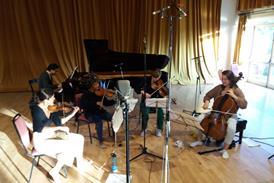


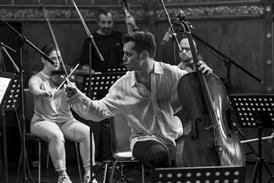
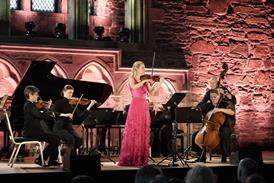
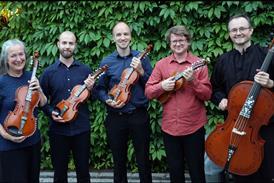



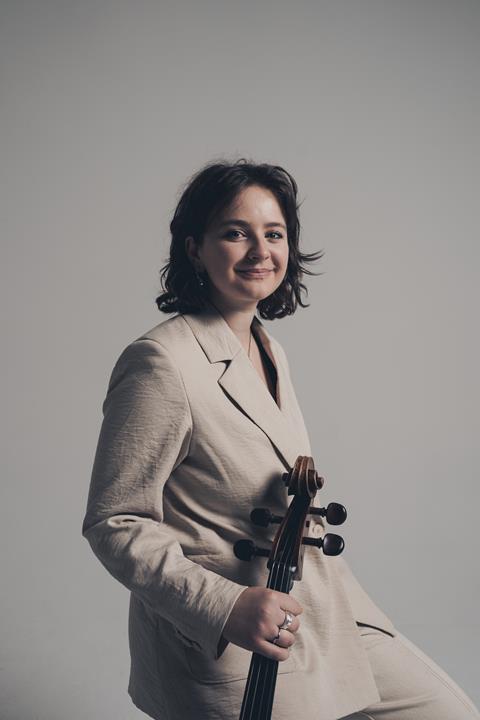
Rehearsing Amy Beach’s Piano Quintet in F sharp minor with the Kaleidoscope Chamber Collective was a memorable experience for the cellist
Discover more Featured Stories like this in The Strad Playing Hub.
Read more premium content for subscribers here
Amy Beach’s Piano Quintet in F sharp minor op.67 is a joy to play. It’s a beautiful piece of music, emotional and very honest. The opening of the slow movement in particular is like bathing in golden sound, and gives a feeling of stillness and calm in the middle of what is otherwise a very dramatic work. I also love the string textures throughout the piece, and the way they work with the piano – and the harmonies are absolutely gorgeous. The music creates a very intense emotional world that’s capable of transporting the listener, and it contains a lot of unusual themes and ways of conveying love, yearning and longing.
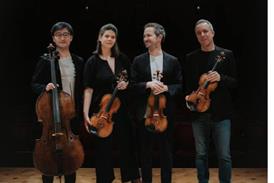
I first rehearsed the Piano Quintet in 2019 with the Kaleidoscope Chamber Collective, a period that’s still etched in my memory. The piece took a little bit of getting to know: none of us were really sure how it would turn out. But as we all delved deeper and deeper into it, we developed clearer ideas of how it needed to be played. There’s something of Brahms in there, but Beach’s music is written with such incredible skill that it conveys a sort of ease where you don’t even notice the mood shifting, or the colours changing. Brahms’s textures are a little thicker, perhaps. The more I played the Piano Quintet, the more I fell in love with it, and now I can’t imagine not having a relationship with it.
The experience got me hooked on discovering underrepresented composers and trying to find all the masterpieces that I’d never heard of. I’d felt the need to broaden my repertoire, but I’d never acted on it before then. My teacher Leonid Gorokhov had also encouraged me to look beyond the standard canon when I was a student. I later discovered people such as the Baroque composer Élisabeth Jacquet de La Guerre, who wrote unbelievably cool music.
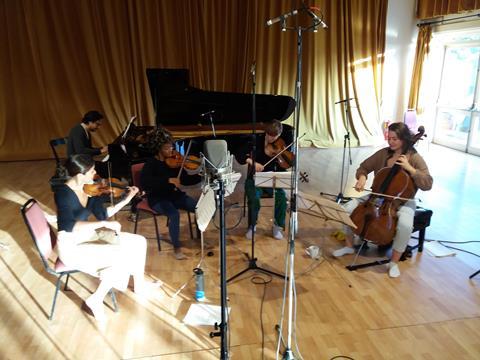
The first time we performed the Quintet was in 2019 at the Cheltenham Music Festival, where it was recorded for BBC Radio 3. Then at the end of 2020, we recorded it for Chandos for our American Quintets album. Soon after that, one of us happened to hear our Cheltenham recording on the radio, and said: ‘It was pretty good, but not quite as good as ours’ – not realising they were listening to our own recording!
It shows how much one’s interpretation can shift in just a year, especially with music of such intensity and emotion: as you change, your interpretation changes as well. There was a period when we started playing the second movement increasingly slowly, until we realised that we’d made it too slow. So I think it’s good to keep challenging one’s interpretation and see how it evolves. And, as often happens with underrepresented composers, if you don’t already know their compositional language, you can’t automatically go into their style.
When rehearsing with others, slow practice is extremely beneficial. It gives you time to respond to the harmonies physically, and to understand how your part interacts with the others. I really enjoy this process; it means that when we eventually speed it up, the harmonies and textures aren’t missed or glossed over.
This kind of piece is very much about drama, not about being as perfect as possible.
INTERVIEW BY CHRISTIAN LLOYD












No comments yet