



Gillian Wills reports back from the 2026 edition, which spotlighted a plethora of international and local talent in the festival’s new home of Cairns-Gimuy
Read more Featured Stories like this in The Strad Playing Hub
For 34 years the Australian Festival of Chamber Music (AFCM) was hosted by the city of Townsville in far north Queensland. It boosted the economy by millions and attracted a keen international, national and local following. A long promised acoustically resonant new theatre failed to materialise and the AFCM boldly shifted to Cairns, a buzzing tropical city further north. It’s a popular tourist destination, situated on the coast with a rainforest climbing the mountains behind it and the Great Barrier Reef a short boat trip away.
There are many festivals and nature tours in this vicinity. The Tanks Arts Centre is a unique, heritage-listed multi-arts venue housed in converted World War II naval oil storage tanks. Stefan Dohr, the Berlin Philharmonic Orchestra’s principal horn, was thrilled to go on a trip on his day off, where he marvelled at crocodiles basking along riverbanks and whales breaching in the sea.
Jack Liebeck, the artistic director, honoured indigenous culture. Gondwana, an indigenous children’s choir contributed to a concert in ‘Cairns-Colossal’, an evening event charting the city’s 150-year history. Didgeridoo specialist William Barton, a soloist with many of the world’s acclaimed orchestras including the London Symphony Orchestra, performed his own work, Dialogue. The piece was conceived as an artistic space for communication and connection between indigenous and non-indigenous voices. It featured Barton improvising vocally and on the didgeridoo.
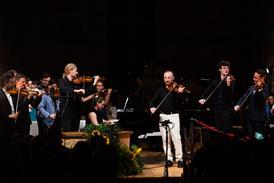
Liebeck made sure the AFCM’s new welcoming home was celebrated through the commissioning of new chamber works which champion the area’s environmental gold. Sam Wu, an Australian based in Las Vegas, this year’s composer-in-residence, penned a tribute to Cairns-Gimuy which premiered in the opening Gala.
Scored for flute, clarinet, violin, viola, cello and piano, Forest, Ocean, City channelled a glistening rainforest in the wet season, a gently breathing sea and urbanity’s darker voice. A pattering element in the piano’s upper register executed by Piers Lane, one of the AFCM’s former artistic directors, reflected droplets of rain.
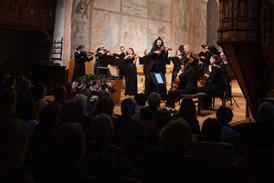
This world premiere offered rewarding listening on an otherwise conservative, yet crowd-pleasing programme designed to introduce this year’s artists. The locals especially appreciated Wu’s impressionistic homage to their home.
One of the positives of this ambitious festival is the chance to hear some of the world’s finest players delivering eclectic repertoire in many instrumental combinations. Violinist Alexander Sitkovetsky, of the Sitkovetsky Trio, cued an inspirational account of Mozart’s Eine kleine Nachtmusik graced by exquisite phrasing and propelled by an irresistibly fizzing energy.
Liebeck’s vision is bold. He is keen to present classical music concerts in unusual, innovative ways. Performances took place in a variety of settings including the Cairns Performing Arts Centre and Bulmba-Ya Theatre. Pop-up, al fresco performances along the Esplanade were accompanied by the eerie cries of curlews, a large Australian ground-dwelling bird. Charlotte Miles played Bach’s demanding Suite no. 4 for Solo Cello with heartfelt authenticity and impeccable skill on board The Spirit of Cairns lunchtime cruise. She was unfazed by the hum of the boat.
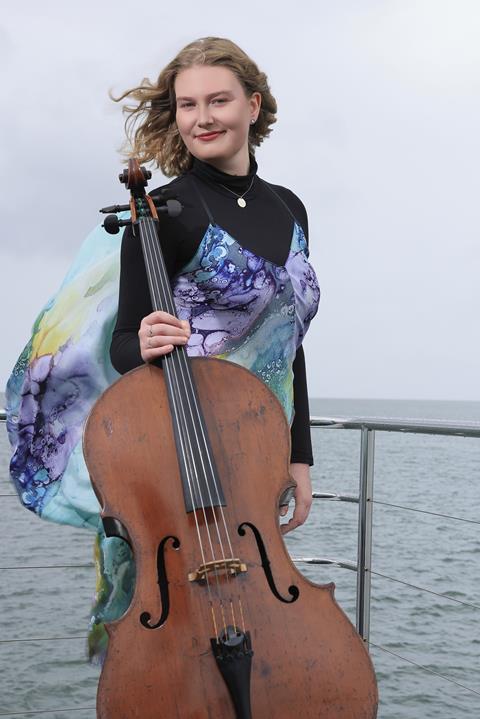
Wonderful World, the brainchild of French cellist Christian-Pierre La Marca, is an ode to nature, with stunning visual imagery by cinematographer Yann Arthus-Bertrand which was projected onto the back of the stage while the festival’s elite team of string players, branded as the All-Star Orchestra, surrounded soloist and narrator La Marca.
This multi-media showed occasional harrowing footage. To offset this the playlist featured easy listening of largely melodic pieces – Après un rêve by Faure, Mancini’s Moon River, Arlen’s Somewhere Over the Rainbow which revealed La Marca’s astonishing cello voice, a miracle of eloquence.
La Marca favoured a subdued aesthetic, and this was honoured by the ensemble’s translucent accompanying lines and by pianist Kristian Chong. His discreet figurations contributed a tantalising palette of pastel hues. Bloch’s poignant Prayer for cello and strings was a highlight.
In order to create a connection between audience and performers, open rehearsals were programmed and in ‘Conversations’, Liebeck interviewed the artists. The stories and anecdotes they told amused subscribers, dispelling stereotypical notions about classical musicians.
Sitkovetsky reminisced about his time as a student at the Yehudi Menuhin School and how he had a lesson with the famously adventurous violinist Gilles Apap. The audience chuckled when Sitkovetsky said Apap can be viewed on YouTube shredding a classical piece in the manner of Jimi Hendrix.
Alexandra Raikhlina spoke of the Aurora Orchestra, the acclaimed British ensemble, whose players memorise entire symphonies. She expressed relief that due to her involvement at the festival she had not memorised the violin part for a performance of Mahler Symphony no.1 at the BBC Proms on 1 August.
At a prestigious festival there’s an expectation that the performances will be highly professional. ‘Twilight’s Embrace’ reached an even loftier plane and the audience was spellbound.
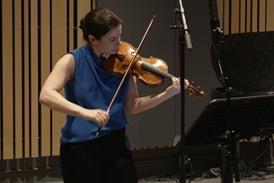
Australian Margaret Sutherland’s dream to be a composer was hindered by her husband, a psychiatrist, who believed that if a woman wanted to create music it indicated a mental disorder. Violinist Alexandra Raikhlina and pianist Kristian Chong’s insightful, tender reading of Sutherland’s impressionistic Nocturne for Violin and Piano composed in 1944 was rewarding and gratifying.
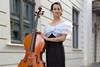
Julian Smiles introduced Arvo Pärt’s powerful Spiegel im Spiegel and spoke with heartfelt sincerity about the rapidly changing world and the need for the stillness Pärt’s music generates. Beginning to play with Chong’s luminous piano accompaniment he closed his eyes and bowed the cello with a wellspring of moving intensity. When the last note died away a prolonged silence greeted the performance before the audience applauded.
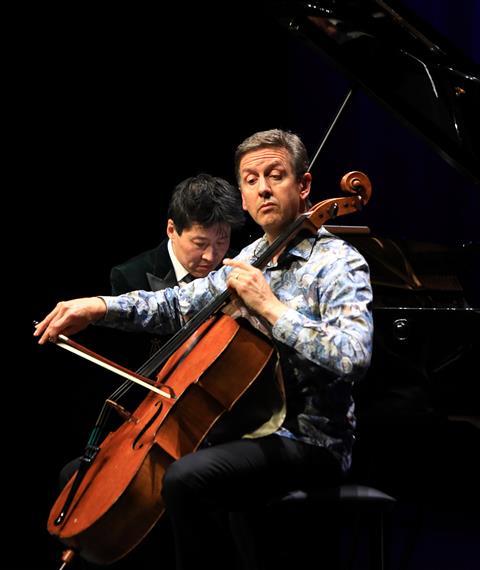
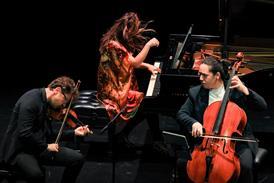
The Sitkovetsky Trio invested each of Bloch’s Three Nocturnes for Piano, Violin and Cello with glorious tone, vivid colour, infectious energy and impeccable unity. The contrasts between each character piece were sharply defined from the mystery in the first, the soothing balm of the second to the stormy third nocturne which the Trio communicated with a visceral muscular drive.
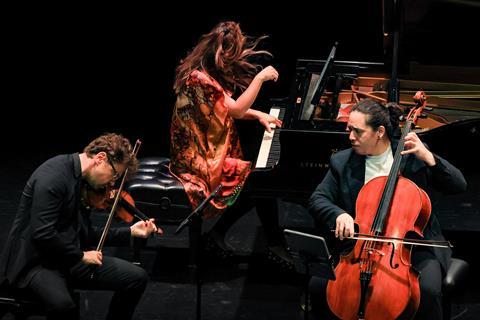
Alex Turley’s Substratum, a world premiere, was inspired by the tropical rainforest floor. In his introduction, flautist Joshua Batty praised the AFCM for commissioning several new works scored for flute and strings.
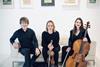
Violinists Doretta Balkizas and Dimity Hall, UK violist Benjamin Roskams and cellist Charlotte Miles delivered a convincing illustrative backdrop. Turley’s music flowed through three continuous movements. The first represented earthy leaf matter which metamorphosed in the second stretch and in the third, was propelled towards the light of day by driving strings. The work was an admirable vehicle for Batty’s impressive virtuosity as he championed Turley’s meandering ornate melodic strands.
Composed in the late 1820s towards the end of Schubert’s life, Die Winterreise is a setting of 24 poems by Wilhelm Müller. In this concert, some songs used Iain Festeraine’s arrangements for violins (Dimity Hall and Dene Olding) viola (Irina Morozowa) cello (Charlotte Miles) to enhance Schubert’s much loved song cycle about a heartbroken man trudging through an icy, snowbound landscape to forge a distance between himself and his former lover.
Despite its European wintry setting, Australian audiences love the work and the warm balmy evening in far north Queensland added to the irony. Members of the audience were disappointed that only twelve of Schubert’s 24 songs had been programmed.
Schubert’s cycle wallows in industrial scale gloom uplifted by lovely lyricism. Each of the songs enshrines aspects of the inhospitable landscape to communicate the man’s despair. Tenor Roger Tritschler sang the spurned man’s thoughts with soaring emphasis and every shade of colour and nuance he could muster in his vividly dramatic account.
In between each of Schubert’s songs, Tritschler narrated a poem to resonate with the sentiments in the ensuing Schubertian song. He recited poems by Stevie Smith, Edgar Allen Poe, John Donne and Thomas Moore. Since this programme was dedicated to the memory of Australian literary giant David Malouf a poem by him would have had extra currency.
Coaching the next generation of chamber musicians is another dimension of Liebeck’s vision. Violin lecturer Doretta Balkizas from the University of Queensland gave an inspiring masterclass when she coached a quartet from the University of Melbourne, which performed the first movement of Haydn’s String Quartet in B flat, op.76, no.4. She was encouraging but firm.
‘Do you feel what you play or do you do what you’ve been told?’ she asked. ‘Even though it’s soft it shouldn’t sound tentative. It should be golden. Try breathing out in the spirit you want to convey as you produce a sound.’ Witnessing how the quartet improved due to her insightful steering was impressive.
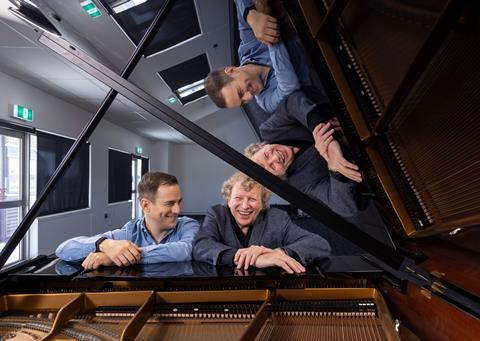
Liebeck has a professional association with Piers Lane, who directed the festival for eleven years, and they have performed together in chamber ensembles on many occasions. They’re not an official duo – Liebeck’s partner in this sphere tends to be Katya Apekisheva – but their friendship and rapport was a demonstrable asset in ‘A Tale of Two.’
Brahms’s Sonata in D Minor op.108 is a stalwart of the repertoire. Lane made light work of Brahms’ virtuosic stretches, never indulging in an overbearing touch. Liebeck’s sharing of the first movement’s themes had compelling restraint, a persuasively seamless to-and-fro with Lane and a purposeful unity which reeled in the audience.
Next year, the UK’s Voces8, the world’s most-streamed classical vocal group, are performing exclusively for the AFCM.
All photos courtesy Australian Festival of Chamber Music.
Read: Colorado Music Festival: 50 years of music beneath Boulder’s Flatirons
Read: Outside the practice room: the value of summer festivals
Read more Featured Stories like this in The Strad Playing Hub








No comments yet