



Read more Featured Stories like this in The Strad Playing Hub
I’ve spent most of my life attending cello festivals, but I had never experienced anything quite like the Cello Family Festival in Qingdao, China, which this year ran from 22 to 26 July.
I knew before arriving that this was going to be a substantial gathering, but I wasn’t prepared for the scale of it. Cellists seemed to be everywhere: young children carrying instruments almost as large as themselves, teenagers playing at an astonishing level, students, teachers, professors and performers – all brought together by this idea of a cello family, started by one very special individual: professor Mingqing Yu.
This year’s festival was particularly unique, marking professor Yu’s 50th anniversary as a teacher. One of China’s most respected cello pedagogues, over those five decades he has produced thousands of cellists who are now performing and teaching around the world, guided by his famous philosophy: ’Try to be a good person, then try to be a good artist.’
During my time in Qingdao, I began to understand how deeply that philosophy has filtered through generations of Chinese cellists. What impressed me was not simply the extraordinarily high standard, but the dedication surrounding it. Lessons were detailed and demanding and expectations were high, but alongside that was generosity. Teachers listened, discussed, encouraged and invested themselves completely in their students. And it didn’t stop when the teaching finished. Nights went on into the early hours as stories and experiences were shared, before somehow everyone was up early the next morning to begin again with unwavering energy.
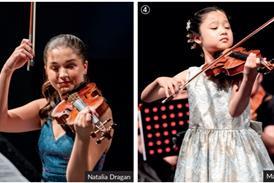
I heard some phenomenal young cellists throughout the festival. The technical level – sometimes at an extraordinarily young age – was staggering. But beyond that, I repeatedly encountered musicians who were intensely curious, incredibly well prepared and desperate to learn. The organisation behind it all was equally impressive. Bringing together so many musicians, teachers, concerts and classes is an enormous logistical undertaking, yet everything happened with remarkable calm, warmth and efficiency.
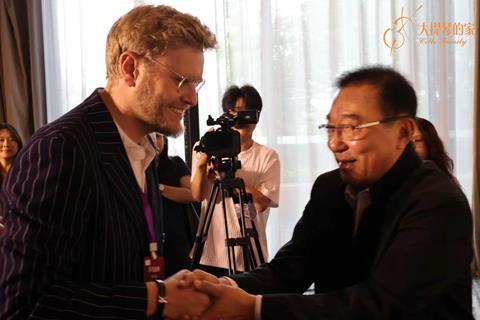
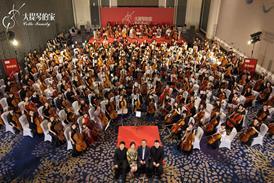
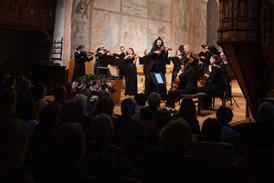
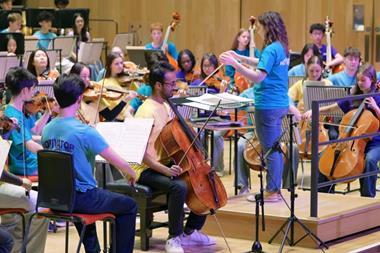
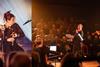
Then there were the concerts, culminating in the extraordinary spectacle of more than 300 cellists sharing a stage [see video above of the group playing Édith Piaf’s ‘Hymne à l’amour’]. There is obviously something slightly crazy about it – hundreds of cellists, hundreds of chairs and music stands, and 300-plus bows all needing somewhere to go, let alone finding a room large enough for all of them and an audience. But once everyone lifted their bows, it was genuinely thrilling. Looking across that enormous group – children alongside students, professionals and teachers – the title Cello Family suddenly became something very literal.
The older I get, the more convinced I become of Professor Yu’s philosophy. In classical music education, we can become obsessed with producing better instrumentalists and assume everything else will somehow follow. But artistry does not exist separately from the human being creating it. That belief has shaped almost everything I have tried to build, both at Scandinavian Cello School and in my teaching as professor of cello at the Royal Northern College of Music.
Cello teaching exists all over the world, each tradition with its own pedagogical lineage and ideas about how this instrument should be played. Spending time with professor Yu and his cello family reminded me just how enormous – and wonderfully international – our community is. We may come from very different backgrounds and traditions, but our love for the instrument is remarkably similar.
After 50 years of teaching, perhaps that is professor Yu’s greatest achievement: not simply the thousands of phenomenal cellists he has helped to produce, but the sense of family he has created around them.
Video courtesy of the Cello Family Festival






No comments yet