

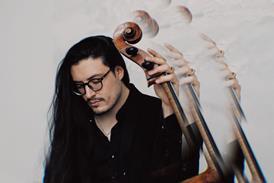



The cellist makes his Carnegie Hall debut on 10 November, with a programme that includes his own original composition, Ad Noctem. He speaks to The Strad about his programming choices, plus his approaches to composing
Discover more Featured Stories like this in The Strad Playing Hub
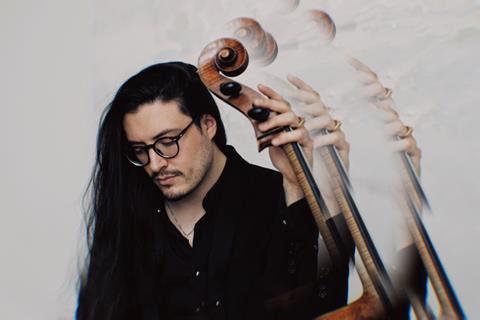
Colombian cellist Santiago Cañón-Valencia will make his Carnegie Hall debut recital with pianist Victor Santiago Asunción. His performance will feature works by Shostakovich, Debusy, Pärt, Ginastera and notably, one of his own compositions, Ad Noctem in the work’s New York premiere.
Not only is Cañón-Valencia an accomplished performer and composer, the cellist is a multifaceted artist, working as a commissioner, recording artist, painter and photographer. The Carnegie Hall appearance is one of five appearances in a North American recital tour taking place in November 2026.
Cañón-Valencia speaks to The Strad about his upcoming New York appearance, as well as his influences and approaches to composition.
You’re making your Carnegie Hall debut on 10 November, a venue that is revered by musicians around the world. What does this appearance mean to you at this stage in your career?
It’s an incredible honour for me to be able to perform a full recital in such a legendary hall! Carnegie Hall is one of those ’bucket list’ venues for all musicians, and I am very excited about my debut there in November.
I think this comes at the perfect time in my career, as I have been able to really grow as an artist and I am confident about what I bring to the stage.
Tell us about the repertoire choices in your programme. Why have you picked these pieces and what are their significance to you?
The repertoire I chose is a mix of some of my favourite pieces, and all are pieces that I feel really connected to. It also helps that the flow between these pieces works really well!
There are plenty of very well known works such as the sonatas by Shostakovich and Debussy, plus Fratres by Arvo Pärt. And as a hidden gem in the programme, Ginastera’s cello sonata – a piece seldom performed but one that really packs a big punch.
I also decided to add my own piece Ad Noctem into the programme. This is the only solo piece and one that I think fits the overall mood of the programme, which has a tendency to lean towards darker music. When I put the programme together I wanted for it to be a bit of a reflection of myself through pieces I love dearly.
Speaking of Ad Noctem, tell us about the composition, and what composing means to you, compared with performance.
I started composing because I love creating and I felt like doing so would help me to be closer with my audiences. Being an interpreter of great music is wonderful, but I was often lacking the feeling of being a creator.
When I’m composing, I rely heavily on improvisation and non-classical music references. I mainly listen to a lot of metal and rock, plus some electronic, jazz and other types of music here and there. I think a lot of this finds its way back to my cello playing, both with new musical ideas when I compose, and also with techniques or just the way I interpret dynamics sometimes.
Ad Noctem is a latin phrase which roughly translates to ’towards the night’. This is a piece that is divided into three different short episodes. Both the first and third are intense and mostly use uneven time signatures throughout – I have a particular affinity for odd time signatures and polyrhythms, so these things always find a way to be extremely prominent in my pieces.
Episode two provides a much needed breather and acts as a contrasting bridge between both sections. This episode is more about sound exploration, melody, and subtle dynamic nuances with an overall improvisatory/loose feeling.
Watch: Cellist Santiago Cañón-Valencia performs his own composition, ‘Ouróboros’
Read: Himari: the young violin sensation on Brahms, Heifetz and her debut album
Discover more Featured Stories like this in The Strad Playing Hub









No comments yet