
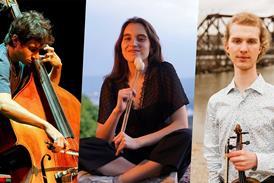

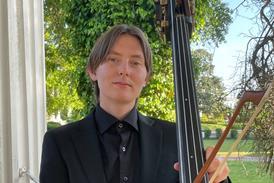
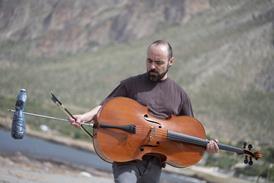
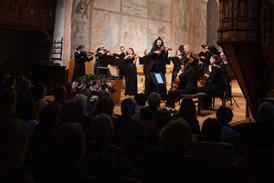

’Studying at the centre was a unique experience and very impactful for me: it made me feel more like a string player than just a bass player,’ says Glimberg
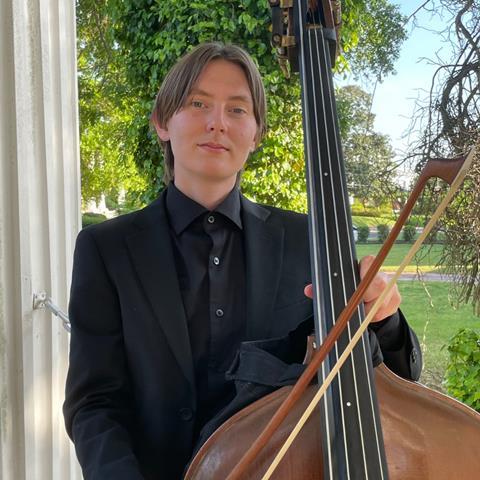
It’s a question I’m often asked: how did I, a bass player from Sweden, find this tiny school in Macon, Georgia? Well, my teacher in high school was an alumnus of the Robert McDuffie Center for Strings, and he knew it would be a good place for me, with many opportunities for chamber music and solo performances. I graduated from there in 2025.
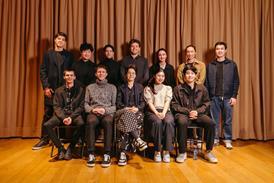
I’m not sure there was such a thing as a ‘typical day’ at the centre, as our schedule changed pretty much every week. The core university classes were in the earlier part of the day – since it’s not just a conservatory we had to take, for instance, a maths class and a writing class. While there would be a heavy focus on chamber music in some weeks, in others there’d be more time spent on orchestral playing because we’d have a concert coming up. It was never boring and it worked, thanks to the small numbers: 27 students in total, calculated perfectly for chamber music groups.
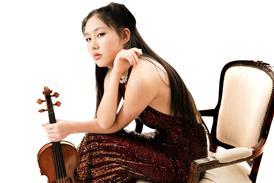
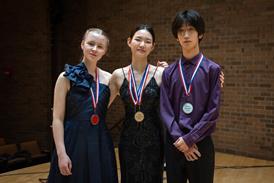
It’s pretty multicultural, too. During my time, there were people from all over the US and Canada, as well as other countries such as Japan, China and Armenia.
All the studios are split with at least two faculty members. My bass teachers were Daniel Tosky and Jeffrey Turner, although Turner is no longer at the centre. The teachers all fly in and really devote their day to the school, so I would often play for all of the faculty – not just the double bassists.
Studying at the centre was a unique experience and very impactful for me. Overall, my favourite part was that it made me feel more like a string player than just a bass player. The close-knit community makes it easier to find out what you want to do, with everybody supporting you.
Subscribers to The Strad receive the 2026 Degrees supplement free with their copy of the May 2026 issue









No comments yet