
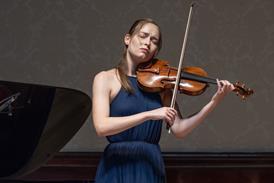





At Romania’s George Enescu International Competition, Amanda Holloway witnessed a showcase of exceptional violin and cello talent – culminating in the crowning of the youngest ever winner
Discover more Featured Stories like this in The Strad Playing Hub.
Read more premium content for subscribers here
Early autumn in Bucharest. The sun was hot but the trees lining the streets were still glossy and green and there was a pleasant breeze in central Cişmigiu Park. It was the first day of the school year and teenagers were milling around the upmarket shopping streets in their jeans and white T-shirts, giving an air of youth and energy to this venerable city.
Central Bucharest is a mixture of imposing 19th- and early 20th-century mansions, former banks and palaces, many of which are now hotels and museums. They’re flanked by 21st-century plate glass office blocks and construction sites with cranes punctuating the skyline. On the side streets there are crumbling villas covered in ivy or graffiti, with glimpses of Romanian Gothic or Renaissance style under the grime.
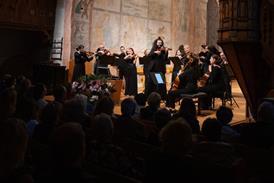
The National University of Music lies on the street leading to the city’s main concert hall, the Romanian Athenaeum, and these two buildings are at the heart of the biennial George Enescu International Competition (the 2026 edition taking place from 23 August to 13 September). The university’s auditorium is host to the rounds and semi-finals, whereas the finals and the recitals by jury members and other international artists take place in the hall of the neoclassical Athenaeum.
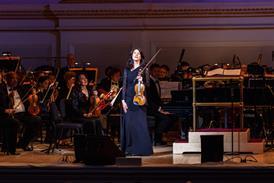
The 20th edition of the competition was in full swing when I arrived on 7 September, the composition prize having been awarded the night before, and the final of the cello competition taking place that evening. The Athenaeum, with its wedding-cake-like plasterwork and distinctive dome, has a fabulously decorated auditorium. The city’s storied history is displayed in murals all around it, and two gilded semi-naked angels hover over the proscenium arch. There’s plenty to ponder if your attention wanders during the second Dvořák Cello Concerto of the evening, for example.
Romania’s most celebrated classical musician, George Enescu (1881–1955), was a composer, violinist, pianist, conductor and teacher (his pupils included Yehudi Menuhin, Christian Ferras, Ivry Gitlis and Ida Haendel). After his death in exile in Paris, the Bucharest authorities planned events to honour his memory, including the launch of an international competition.
Initially it was for violin and piano, with the cello and composition categories introduced later. The violin jury in 1958 (the inaugural year) included Yehudi Menuhin, David Oistrakh, John Barbirolli and Yvonne Astruc – an extraordinary line-up in the middle of the cold war. As the 2026 programme book remarks, ‘For the regime in Bucharest at the time, the Competition represented a matter of prestige, an exercise in cultural diplomacy and a calculated opening towards the West, intended to project the image of a modern state, generous towards the arts and the artistic legacy of George Enescu.’ Plus ça change…
During the Nicolae Ceauşescu years the competition disappeared, but it was revived in 1991 and in the last three and a half decades has regained its prestige, with winners including the likes of violinists Nemanja Radulović (2001) and Valeriy Sokolov (2005) and cellist Zlatomir Fung (2016). Testament to its standing is the huge number of entries this year: 819 applicants from 58 countries for the competition’s four categories – violin, cello, piano and composition.
Indeed, the event now bears comparison with top international contests such as the Queen Elisabeth and Tchaikovsky competitions – in its organisation (there’s a crack team of employees from Artexim, the Romanian Ministry of Culture agency that oversees the festival, known affectionately as the Angels), in its musical support (all piano accompanists are excellent) and in the backup it offers to participants.
For the winners, the relationship continues after the competition, with guaranteed performances at the next two editions of the George Enescu International Festival, which takes place in alternate years, plus appearances with Romanian orchestras and a year’s worth of mentoring in career management.
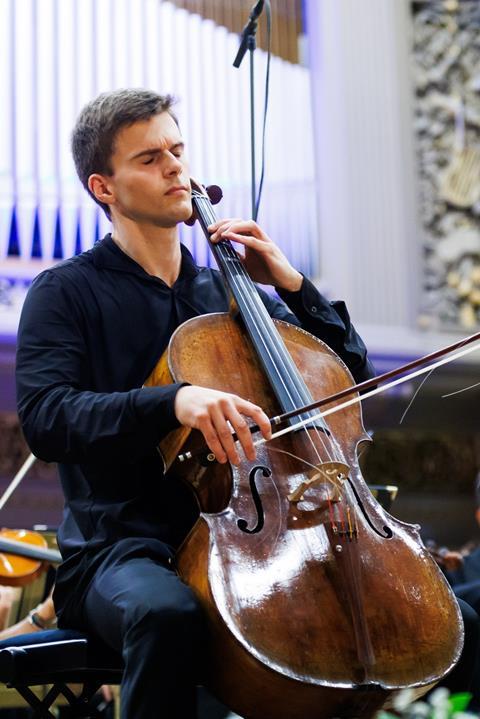
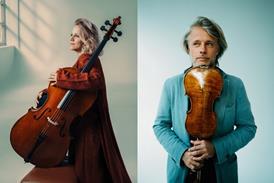
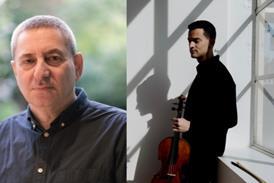
Arto Noras, the president of the cello jury and founder of the International Paulo Cello Competition in his native Finland, was delighted that cello participants outnumbered violinists this year. There were three finalists; American Joshua Kováč (19) extracted every ounce of emotion from the popular Dvořák Cello Concerto, while Swiss cellist Samuel Niederhauser (28) tore into Shostakovich’s First Cello Concerto, shredding his bow hair with an abrasive attack.
South Korean Sanghyeok Park (21) also played the Dvořák, with a delicate touch which meant that he was somewhat overshadowed by the excellent Romanian National Radio Orchestra, conducted by Case Scaglione. Niederhauser deserved to win first prize for his daring, no-holds-barred performance, though I found second prize winner Kováč’s absorbing performance more appealing.
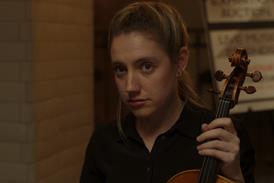
Both cello and violin finals attracted a packed audience of glamorous young people, sharp-suited dignitaries and redoubtable Romanian matrons fanning themselves in the heat. President of the violin jury Mihaela Martin, who left Romania in her twenties in 1986 to pursue her international career, admires the competition’s success in attracting young people: ‘I think the organisers have a very strong media strategy – they target the younger population very smartly, to make them interested in coming.’
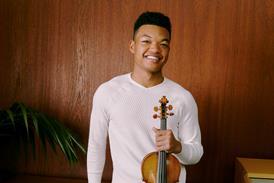
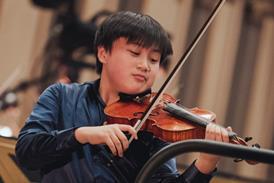
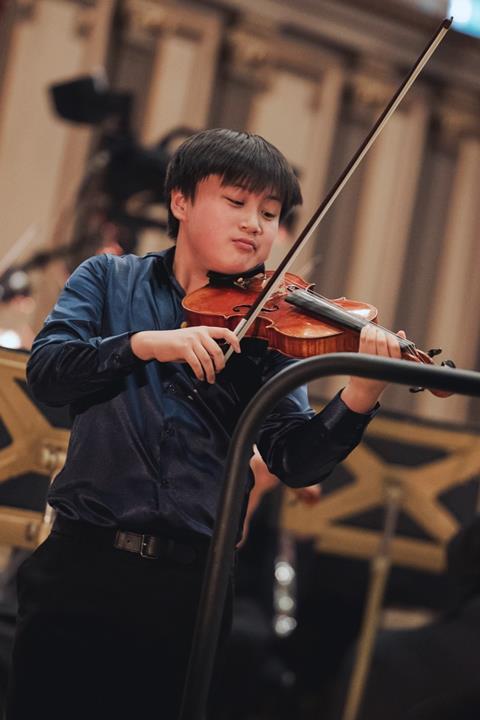
As for the competitors (the event is open to anyone up to age 35), they are definitely getting younger – the biographies show that those from China and Korea in particular start learning their instruments from as young as two or three. This year, Seojin Jung, a 14-year-old Korean cellist, won the Playing for Tomorrow Prize, and Jayden King, an 11-year-old 6th grader at Franklin Avenue Middle School in Franklin Lakes, New Jersey, made it through to the violin final. Martin told me she judges competitors only on results, not on their age.
‘If someone sounds like a grown-up, I don’t have a problem with ranking them according to their merit.’ She abstained from voting for the young King, because he had taken part in her masterclass, but she told me that it’s always exciting to discover an outstanding player. ‘Someone who can display that kind of maturity at that age, and handles his role on stage so well… I guess he’s quite robust and I hope that when he goes through the difficult years – which we all do! – that he will not be shaken.’
Just days later in the grand surroundings of the Athenaeum, playing the Tchaikovsky Violin Concerto with impeccable skill and control, King beat 20-year-old Italian Francesco Papa and 28-year-old Korean Eun Che Kim to become the youngest ever winner of
the George Enescu International Competition. The buzzword for this year’s competition has definitely been ‘youth’.
Read: Postcard from Canada: Montreal International Music Competition
Read: Postcard from Brussels: Queen Elisabeth Cello Competition
Discover more Featured Stories like this in The Strad Playing Hub.
Read more premium content for subscribers here







No comments yet