
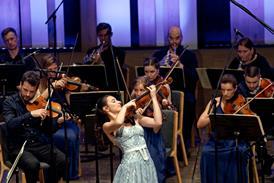




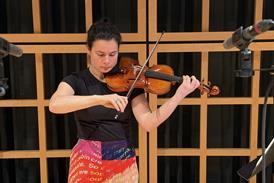





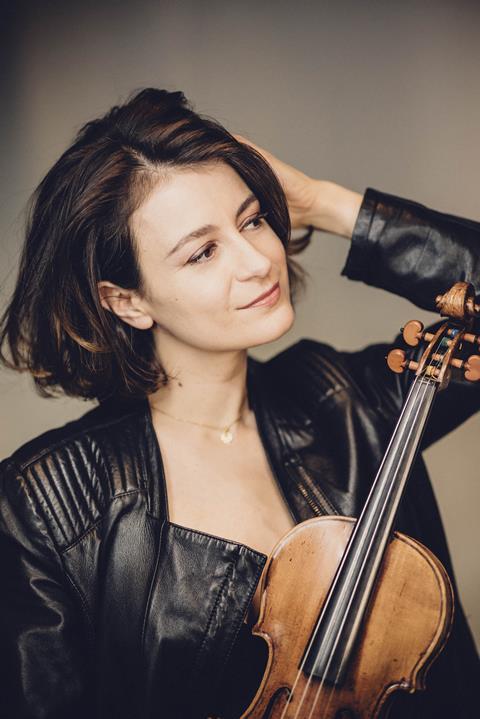
William Walton’s Violin Concerto is a firm favourite in the Bulgarian violinist’s repertoire – even though she had only two weeks to learn it
Discover more Featured Stories like this in The Strad Playing Hub.
Read more premium content for subscribers here
My first encounter with Walton’s Violin Concerto was quite unusual. Normally, musicians hear a piece while growing up, fall in love with it and then want to play it themselves. I first heard the Walton in 2017, when I was asked to perform it at the Tiroler Festspiele Erl. It was extremely short notice, and so I quickly found the 1950 recording, with Jascha Heifetz as soloist and the composer conducting, and listened to it with a copy of the score in front of me. I was astounded: how had I never come across this fantastic music before? After that first listen, I knew I had to perform it – even though I only had two weeks in which to learn it!
I spent around ten hours per day practising the concerto, or studying the score, and quickly discovered that it’s one of those pieces that reveals more and more layers as you immerse yourself deeper within it. For me, it somehow opened a new emotional world: it’s very intense but also intimate, which created a particularly personal connection with me. The first movement in particular requires an intimate sound that I call the opposite of virtuosic: very slow, endless bows that bring out the very long lines and convey a kind of bittersweet feeling of longing. I think the most interesting part for me was the discovery of Walton’s emotional honesty in this movement.
That feeling, which I connect with the composer’s romantic relationship with Alice Wimborne, really stands out from the rest of the piece. The third movement seems to embody the tension around the gathering clouds of war, and prompts the soloist to discover that fragility and vulnerability in themselves. It requires a lot of courage to approach music in this way, and the more I played the concerto, the more I felt exposed to that vulnerability. It comes with the feeling of risk that happens on stage – pushing oneself out of one’s comfort zone. I think that accepting that feeling is a strength – and helps to create a truthful performance.
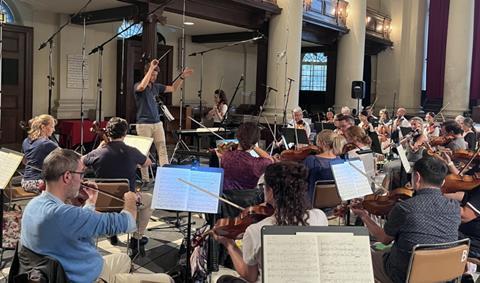
I’ve performed the concerto only a few times since that first time, but each time it feels as though I’m giving a more truthful performance, focusing more sincerely on my own response to the music, and less so on the technical aspects.
If I were advising a student practising the Walton Concerto, I’d tell them first of all to focus on the score, try to understand all the markings and see how they affect the character of the piece. There are so many double-stops and articulations that it’s hard to take in all at once. Secondly, it’s important to work out the kind of sound you want, and which you think is appropriate for Walton’s language. In a way, we can say that about every piece, but Walton’s sound in particular has a very individual character: it’s not enough simply to go for a romantic quality.
As well as the Heifetz recording, which was an important source of inspiration and information for me, I listened to the one by Yehudi Menuhin from 1969, again with Walton conducting. It gave me a different perspective; Menuhin found something extremely moving in that first movement, and Walton later wrote to him to say that he was beyond happy with this performance. Finally, Ida Haendel’s 1977 recording is well worth listening to, for the energy she puts into it, as well as her very clear articulation and the variety of colour that she creates with her right hand.
INTERVIEW BY CHRISTIAN LLOYD
Read: Session Report: Violinist Liya Petrova on recording Korngold and Strauss
Discover more Featured Stories like this in The Strad Playing Hub.











No comments yet