


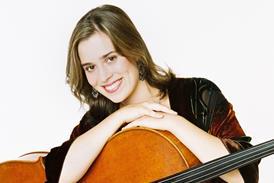
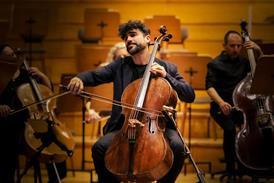



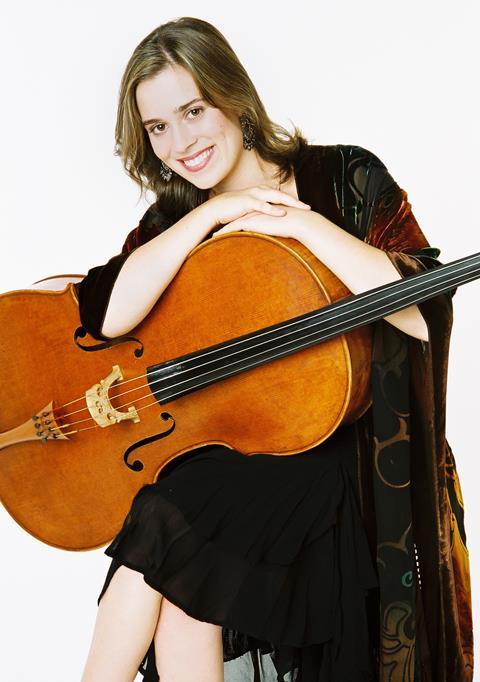
One half of the renowned Fraser and Haas duo, Natalie Haas has been a pioneer for bringing cello to Celtic fiddling tradition. She speaks with Anthony Arnone about her musical journey, plus what’s next for her after 26 years of the duo
Read more Featured Stories like this in The Strad Playing Hub
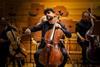
If you picture a concert stage of Scottish or Celtic fiddle music, you might imagine violins, perhaps a guitar or accordion, even a harp. What you might not realise is that, nearly 200 years ago, the cello was an important part of this ensemble. Natalie Haas has helped bring the cello back to this tradition and is now one of its most sought-after players.
For the past 26 years, Haas and Scottish fiddler Alasdair Fraser toured the world as a duo, captivating audiences with their distinctive sound and virtuosity. After more than two decades of being ‘second fiddle,’ Haas has begun exploring new directions – this time making her musical life more of a family affair. She is now touring with her sister, Brittany Haas, a world-class fiddler in her own right.
While both sisters began with classical training, they discovered their love of traditional music early on at Fraser’s Valley of the Moon Scottish Fiddle School. They first attended at ages 11 (Natalie) and 8 (Brittany), but it took a few summers for the real magic to reveal itself.
‘We found out that all the good stuff happens at night. Jamming and learning outside of class is really where you develop practical skills.’
As teenagers, both sisters reached a turning point.
‘It probably took me until around 15 or 16 to know that I wanted to do this kind of music,’ Natalie recalls. ‘Seeing people just a bit older than me – Hanneke Cassel, Laura Cortese, Lissa Schneckenburger – pursuing this as their dream really inspired me. They were incredible role models, and it suddenly clicked that I could make a career out of this. I loved classical music, but once I found this other world, I found my people.’
Soon after, the sisters’ paths diverged slightly. Natalie focused on Scottish music while Brittany pursued old-time traditions. Around that same time, Fraser asked Natalie – then just 16 – to become his duo partner.
‘I was a little star-struck,’ she admits. ‘He was the director of the camp I had attended for years and a big name in the Scottish fiddle world.’
Touring with a former teacher was initially intimidating.
‘I was very shy. I would just show up, play, and not say much. But Alasdair, along with mentors like Bruce Molsky and Darol Anger, was very encouraging.’
Over the next 26 years, Fraser and Haas toured extensively and recorded eight albums, even as Haas studied at the Juilliard School. Their violin-and-cello pairing was unusual in this genre, and Haas had to develop her own approach to using the cello as an accompanying instrument.
‘There was a tradition of using the cello 200 years ago, but it largely died out. I figured a lot out by imitating fiddlers when they weren’t playing melody, or by copying piano left-hand patterns or guitar rhythms.’
A breakthrough came when Darol Anger introduced her to chopping techniques in 1999.
‘Learning how to chop completely changed my world. The cello is actually a great support instrument once you can do that.’
A few years ago, the sisters’ musical paths began to converge again. In 2018, they were invited to perform together at Fiddle Fair in Baltimore, Ireland. More invitations followed.
‘We always said yes so we could spend time together,’ Natalie says. ‘We decided to make a CD so we’d have something to offer. At first we played music from our childhood, but we quickly shifted to writing our own.’
That experience planted a seed that would ultimately lead to a major transition. Haas had spent the vast majority of her career with Fraser – about 95 per cent of her professional life – so stepping away was not easy.
‘It’s hard to find balance,’ she reflects. ‘After more than 25 years touring with the same person, it can become challenging. You know how to push each other’s buttons.’
Their partnership remained highly productive, evolving from exploring traditional repertoire and the cello’s historical role to creating contemporary, composition-driven work rooted in Celtic traditions. Their final albums together featured entirely original material.
Still, the relationship had reached a natural turning point.
‘Alasdair always treated me as an equal, even putting my name on the billing early on. But creatively, it became harder in recent years. I had been thinking for a couple of years that it might be time to try something new. When our agent retired, it felt like the right moment. I suggested we part ways, and he said he knew it was coming eventually.’
Working with a sibling brings a different dynamic – both rewarding and challenging.
‘Playing with Alasdair was comfortable – almost too comfortable. With my sister, it feels easy but fresh. There’s a deep rhythmic connection; we don’t even have to talk about it. At the same time, we don’t always agree, and I feel like I’m getting to know her as an adult for the first time. We bring different influences, and even when it takes time to align, the result is stronger. She makes me a better musician.’
Brittany echoes that sentiment:
‘I feel incredibly lucky to make music with Natalie. She’s such a solid, groovy, creative musician – and she can play anything. But we also have this shared history, which makes communication easy and honest. It’s the greatest gift.’
Brittany’s use of a five-string violin expands the duo’s possibilities, allowing for greater balance with the cello. On their 2023 album, Haas, Natalie even wrote a piece – ‘Finally’ – in which the cello carries the melody throughout.
‘That’s never happened before,’ she says. ‘No fiddle player has ever let me do that. It says a lot about how equal the voices are in this duo.’
The partnership has opened new doors for Haas both musically and personally. She recently moved to Galicia, Spain, a place she had come to love through years of performing.
‘I had a community there and fell in love with the culture, the people – and of course the food and wine. I came for the adventure and stayed for love.’
She is also embracing a period of creative uncertainty.
‘I have several new ideas, and I’m enjoying the insecurity of it. I think that’s healthy creatively.’
Among her ambitions is a solo cello album that foregrounds the instrument in this tradition.
‘It feels like time for that – an album of my own compositions featuring the cello as a solo voice.’
Composition has already become a larger part of her work. The Haas sisters’ debut album features mostly Natalie’s pieces – about 80% – and has been widely praised.
‘My goal is to write “bangers” – memorable tunes people want to play. In traditional music, there’s a tension between preserving old repertoire and creating new material, but there’s also a huge outpouring of new compositions. The goal is to add to the repertoire and write something that lasts. When people pick up your tune, it feels like a real achievement.’
Beyond performing and composing, Haas is also a dedicated educator. She hopes to write a comprehensive method book on using the cello in folk traditions.
‘I want it to be the go-to resource – not just for beginners, but for advanced players who already have technical facility and want to learn this style.’
In the meantime, Natalie and Brittany continue building something new together.
‘I feel like we’re going to new places and pushing boundaries,’ Natalie says.
Their latest album, North Node (released 19 June 2026), marks another step forward in that journey, blending tradition with innovation and strengthening their shared musical voice.
For Natalie, this new chapter reflects the same spirit that inspired her composition ‘Finally’:
‘It’s about the triumphant feeling of following your own desires – ignoring societal pressure and going after what you know will make you happy.’
Read: Fiddler Mark O’Connor: An American music story
Read more Featured Stories like this in The Strad Playing Hub








No comments yet