









New research challenges an enduring belief, finding no measurable evidence that a violin becomes more resonant or responsive through six months of regular playing, while leaving open the role of player perception
A long-held belief among string players that violins improve through regular playing has been challenged by a pair of new studies, which found no measurable acoustic or physical evidence that an instrument ‘opens up’ after months of use.
The research, entitled Violin ‘playing-in’: disentangling physical change from player adaptation via physical measurements, was conducted by Hugo Pauget Ballesteros, Philippe Lalitte, Vincent Lostanlen and Claudia Fritz. Published in the journal Acta Acustica, the study investigated the idea that a violin becomes more resonant, responsive or powerful when played regularly over an extended period.
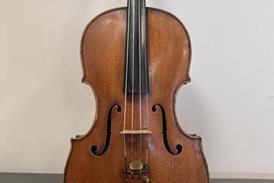
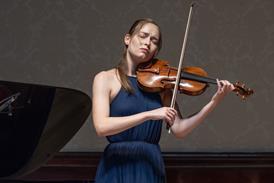
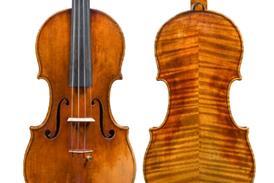
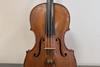
To test the theory, researchers selected three modern violins made between 2012 and 2018, all of which had been rarely played. A professional violin soloist and pedagogue was then asked to play one of the instruments extensively over a six-month period, while the other two remained in storage as controls.
The player chose the violin considered most likely to benefit from the process of ‘opening up’. The process of ‘playing-in’ comprised the violinist producing ’large, broad sounds using the openings of major concertos in naturally resonant keys (such as D, G, and A major)’ in daily practice sessions of one to two hours. The player continued until concluding that the violin had fully ‘opened up’, a point reached after approximately six months.
Researchers then examined whether any measurable changes had occurred. Using laser vibrometry, sound recordings and motion-capture technology, they tracked the instrument’s vibrational behaviour, acoustic output and the violinist’s bowing technique.
The team found no meaningful acoustic changes beyond those also observed in the two unplayed violins. Nor did they identify significant alterations in bow speed or contact point that might explain the perceived transformation.
A companion study explored the question from a perceptual perspective. In addition to the professional soloist, the researchers recruited ten control violinists for blind playing tests and 19 additional musicians and violin makers for comparative listening experiments.
Wearing darkened welding goggles to conceal the instruments’ identities, the violinists took part in blind evaluations of tone quality, power and ease of playing. Additional listening tests involving the other violinists and audience members compared recordings made before and after the six-month playing period. Neither group detected any notable improvement in the regularly played violin compared with the control instruments.
The findings therefore failed to identify any physical manifestation of the ‘opening up’ phenomenon. However, the studies stopped short of dismissing musicians’ experiences entirely. The soloist consistently reported that the instrument felt easier to play and described a stronger connection with it after six months of intensive use. Researchers suggested that growing familiarity with the violin, combined with expectations about how an instrument should develop, may influence performers’ perceptions.
The researchers argue that the findings have implications for how musicians assess instruments when buying or trialling them.
’These findings challenge the traditional narrative of instrument selection,’ the study concludes.
’If high-quality violins are physically stable and do not induce significant motor adaptation over six months, musicians and buyers should trust their initial assessment of an instrument. Identifying a violin as “having potential to open up” may be a misleading heuristic.’
The studies examined whether measurable changes could be detected in the instrument itself over a six-month period. They did not attempt to determine whether players’ long-term subjective experiences of a violin evolving over years or decades might reflect factors beyond those captured by the experiment. It was also acknowledged that the study was limited by sample size.
The authors concluded that while the violinist became increasingly convinced that the instrument had opened up, any such change could not be demonstrated empirically through either acoustic measurements or blind listening tests, leaving open the possibility that the phenomenon may reside as much in the relationship between player and instrument as in the violin itself.













No comments yet