
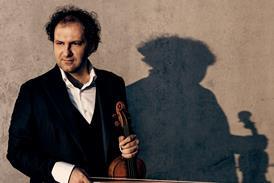








Italian violinist Gian Paolo Peloso talks to Orchid founder Matthew Trusler about their shared teacher, Ruggiero Ricci, ahead of the release of his Fauré album with pianist Bruno Canino
Violin enthusiasts will be familiar with Ruggiero Ricci through his recordings, not least of Paganini’s Caprices. But what was it like to study with him? Gian Paolo Peloso and Matthew Trusler each did so separately for many years, and compare notes in the video above.
‘I had fallen in love with Ruggiero Ricci through his recordings,’ says Peloso, who was 17 when the two first met.
‘I came from the Russian school, and for me, going to have lessons with him was like going to see a magician or a wizard.’
The first months were devoted to intonation, and to what Ricci called his glissando scales. ‘He said that after many decades of work on Paganini’s Caprices, he created these scales as ear training,’ says Peloso. ‘They were very effective.’
Trusler practised the same one-finger scales for as long as he played the violin, and remembers Ricci’s insistence that practising was ear training, not finger training.
What of Ricci’s sound? Trusler recalls his fascination with his teacher’s Guarneri ’del Gesù’. ‘I first thought, “Wow, listen to his violin,” and then quickly realised it’s not his violin. It’s him.’
‘To me, his vibrato was his fingerprint,’ says Peloso. ‘It still reminds me of the great singers of the past, like Magda Olivero. He never over-vibrated. And it always has a singing quality.’
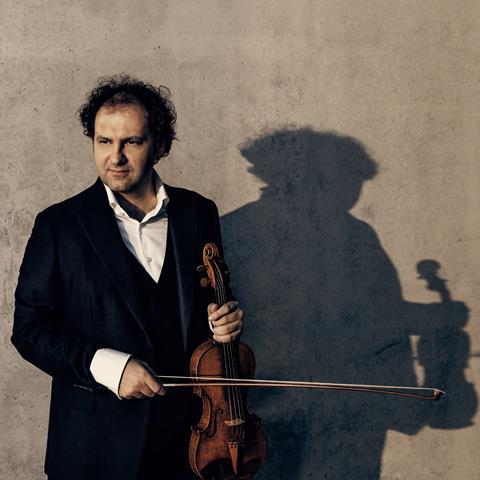
That singing quality is the thread that leads to Peloso’s new album of Fauré’s complete music for violin and piano, the first of several he is releasing on Orchid Classics.
‘The singing element is something that interests me a lot,’ he says. ‘So when I had the chance of recording Fauré sonatas with Bruno Canino, the singing element was there.
‘I didn’t want to copy any other recordings of the Fauré sonatas. I wanted to tell the story of two different Faurés.’
The First Sonata, completed in 1876, is in Peloso’s words ‘very glamorous’ and ‘very much linked to high society, to salon music, to the Proustian world’. The Second followed forty years later, during the First World War.
‘In the second part of his life, he became gradually deaf, and his music started to be more spiritual,’ says Peloso. ‘I felt I could not play that with the same sound as the first sonata.’
The album, which also includes the Romance, Andante and Berceuse, is dedicated to Peloso’s teachers: Ricci, Viktor Pikayzen, Igor Ozim and Pierre Amoyal.
‘I recorded the album with gratitude to these great people,’ he says. ‘And I wish this special sound could be passed also to future generations.’
Peloso made his debut at the age of ten under Luciano Berio. He plays a 1710 violin by Matteo Goffriller.
Bruno Canino has collaborated with string players including Itzhak Perlman, Lynn Harrell and Viktoria Mullova. He and Peloso previously recorded the Respighi and Busoni violin sonatas for Sony Classical.
Fauré: Violin Works is released on Orchid on 27 November 2026.









No comments yet