


![[hasnt been used much] G Hoffman - photo William Beaucardet - a](https://dnan0fzjxntrj.cloudfront.net/Pictures/274x183/0/2/9/44029_hasntbeenusedmuchghoffmanphotowilliambeaucardeta_116713_crop.jpg)

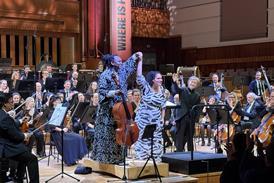







The composer discusses These Righteous Paths, her new concerto for the South African cellist, ahead of its UK premiere at the BBC Proms on 20 July and US premiere at Lincoln Center later this summer.
Read more Featured Stories like this in The Strad Playing Hub
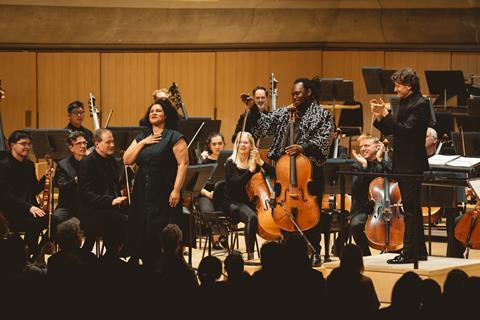
American composer Jessie Montgomery’s These Righteous Paths enters the world with the momentum of a major international concerto. Written for the South African cellist Abel Selaocoe and created in close collaboration with him, the work has had an unusually broad launch. Its co-commissioners include the Deutsches Symphonie-Orchester Berlin, Toronto Symphony Orchestra, BBC Philharmonic Orchestra, Festival Orchestra of Lincoln Center, Aspen Music Festival and School, Oregon Symphony and others.
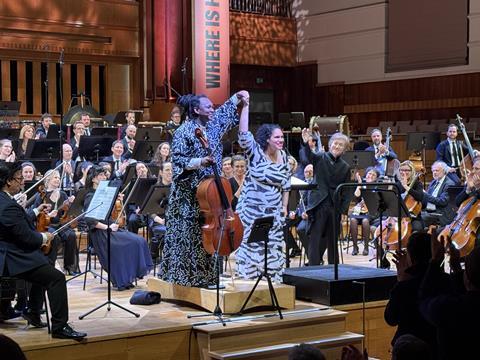
Following performances in Berlin, Brussels, Wrocław and Toronto, the concerto reaches the BBC Proms on 20 July, when Selaocoe performs with the BBC Philharmonic Orchestra under Gianandrea Noseda in a programme that also includes Beethoven’s Ninth Symphony. The Festival Orchestra of Lincoln Center, led by Jonathon Heyward, presents the US premiere on 31 July and 1 August.
The concerto is also one of Montgomery’s most personal recent works. Winner of the 2024 Grammy Award for Best Contemporary Classical Composition for Rounds, she turns here explicitly to family history. Its three movements – ‘All the Ancestors and I’, ‘Another Train Poem’ and ‘A New Song’ – draw on the plays and poems of her late mother, Robbie McCauley (1942–2021), a leading figure in the Black theatre movement in post-Civil Rights-era America.
In her programme note, Montgomery writes of being ‘comforted and inspired’ by McCauley’s words, and of the Sankofa idea that one must ‘look back in order to go forward’. The concerto also responds to what she calls Selaocoe’s ‘cellistic and vocal capabilities’, with writing that makes room for his singing, improvisatory practice and unusually expansive approach to the instrument.
In this interview with US correspondent Thomas May, Montgomery discusses writing for Selaocoe, balancing fixed notation with improvisatory freedom, and bringing family memory, grief and her mother’s poetry into the public form of a cello concerto.
At the earliest stage of composing, what aspects of Abel Selaocoe’s artistry most affected your sense of what this concerto could become: his cello sound, vocal presence, rhythmic language or improvisatory instincts?
Jessie Montgomery: Taking into account Abel’s multifaceted approach to the instrument and his range as a vocalist – and also the ways in which he connects with his audience – I knew early on that I would incorporate as many of those qualities as I could, and that his approach would lend itself beautifully to the poetry in the piece.
I also knew from other performances of Abel’s that he has this beautiful kind of incantation that he does in many of his pieces, and I wanted to make room for that to come through in this work. I composed this work so that he sings and does other vocalisations throughout the piece – but the last movement in particular is the one that is meant to draw the audience deeply into the meaning of my mother’s poems, and to create an opening for his improvisation and his incantation style, if you will.
By the end, his vocalisations become a kind of prayer meant to uplift and imprint the poems’ final meaning in the space, affirming that connection with the audience.
In your programme note, you refer to Abel’s ‘cellistic and vocal capabilities’. Did you imagine his voice as an extension of the cello, as a second solo instrument, or as something that changes the usual relationship between soloist and orchestra?
Jessie Montgomery: All of the above. There are passages where Abel is the narrator, the orator, and other passages where he is a percussion instrument – or several. And then there are passages where Abel is in a duet with himself and with other soloists in the orchestra, singing melodies in counterpoint. So in that way, I imagine him as an extension of the voice and of the vocal qualities of the cello.
You also write that the orchestration moves through influences you associate with Abel’s voice, including ‘baroque continuo, song-writing, Afro-centric rhythms and melodies, virtuoso classical performance, and improvisation’. How did you bring those elements into one musical world rather than treating them as separate stylistic zones?
Jessie Montgomery: First of all, all of those elements exist within one another. The Baroque style, for example, requires a sensitive ear and an ability to improvise through various harmonic worlds – a virtuosity and flexibility of musical ideas and improvisation. It’s a method of exploring styles – or not even exploring styles, but exploring one’s own expression. So none of these ideas is abstracted from one another to begin with. I think that’s an understanding that Abel and I share, and so integrating these elements and using them as a vehicle for the music was not the most challenging aspect of writing this piece.
Given Abel’s improvisatory practice, how did you think about the balance between what is fixed in the score and what can remain flexible or responsive in performance?
Jessie Montgomery: I think this is where his practice and mine really kind of fell into place. Many of my works contain passages that share both fixed and improvisatory elements. When these elements are working well together within a piece, in my opinion, you cannot tell whether something has been notated or whether it’s occurring in the moment. And even if you do notice where the ‘break’ is – the ‘break’, meaning the place where the performer breaks away from the score and text – it’s done in such a way that it honours the pacing, mood and overall quality of what has been established in the fixed notation.
I think, inevitably, adding improvisatory elements creates a kind of natural spontaneity that is felt – certainly by the performer, but hopefully also by the listener – and it adds an emotional layer to the music and the overall dynamic.
Again, I believe Abel and I – in our own worlds and our own experiences – have worked within this modality in parallel, and so coming together was very natural. We often had really interesting discussions about where, when and how the improvisation could interact with what the orchestra and cello are doing. So in many ways, the architecture of the piece is very dependent on these elements coming into balance with one another.
How much of the solo part is tailored specifically to Abel, and how much did you want to leave open for future cellists to find their own way into the work?
Jessie Montgomery: At a certain point in my writing process, I had to forget about future cellists! For a variety of reasons, I had to write for the circumstances and the challenges that were right in front of me, including writing for a cellist who is essentially a one-man band. Just that on its own provided some exciting challenges and opened up my musical ideas in a way that I don’t think would have happened if I’d tried to make the piece ‘universal’.
That said, the music is the music – so it can be adapted in future iterations of the work, and I’m just happy to be working from a really strong original concept rather than trying to conform to what may or may not occur in future performances of this piece.
The piece grows out of your late mother Robbie McCauley’s plays and poems, and from your own experience of grief, memory and inheritance. How did Abel’s musical language help you carry that intimate material into the public form of a cello concerto?
Jessie Montgomery: In the last movement, ‘A New Song’, Abel launches into an extended incantation, or prayer, which creates this mesmerising drone that I feel inspires ideas around what a ‘new song’ could be: the ‘new song’ of humanity, the ‘new song’ of whatever wish one might have carried into the venue that day. Also, Abel and I have experienced something of a cultural exchange or fusion: he taught me a little bit about the music that he grew up with in South Africa, and I incorporated some pop ballad effects into some major sections – and in that way, we were able to experiment with where some aspects of the African and African-American experiences overlap.
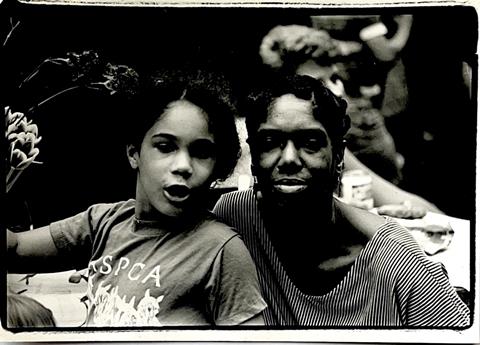
One of the underlying messages within my mom’s work centres around family history, African-American heritage and experiences in the United States. As an African-American, I have experienced longing – or at least deep curiosity – about the cultural life of African peoples.
I believe it is a common experience among African-Americans to want to feel that connection more deeply in some way or another. So for me that feeling, that longing, is part of a bigger sense of wanting to connect to a sense of home, a sense of completion. Whether that home is a country on the African continent or somewhere in the United States – Georgia, Washington DC, New York or Chicago – one always wants to feel a sense of home.
I feel Abel’s vision, and his music, speak to this feeling. The relationship between the music and the words is in itself poetic. So I end up speaking to these really deep feelings of something that is not just felt by me, but felt by all. Music makes the poetry possible – and vice versa.
Music makes the poetry possible – and vice versa
These Righteous Paths has had an unusually wide international life from the outset, with performances moving through several orchestras, countries and audiences. Has hearing, or imagining, the work in those different contexts changed your sense of what kind of life a new concerto can have?
Jessie Montgomery: It’s wonderful to see this work come to life on this scale. I think in many ways this commission mirrors what any composer or creator would want to see, which is that their work can reach a wide audience. I’m of the opinion that music is for everyone and that it shouldn’t be reserved for a select few, but that it invites people from all walks of life to be part of the experience.
For Abel or any soloist, it’s a wonderful opportunity to be introduced to broad audiences and for more people to experience their unique artistry. I think pan-continental premieres could be a way forward. For myself as an American composer, it can be challenging to reach ‘across the pond’, but this project has allowed me to do just that.
The 20 July BBC Proms performance will be available online via BBC iPlayer; tickets for the Lincoln Center performances are available on a choose-what-you-pay basis.











No comments yet