
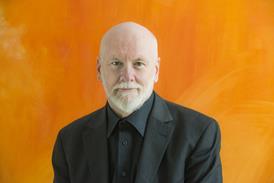
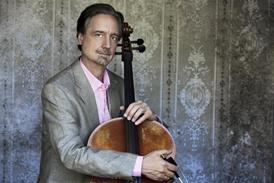
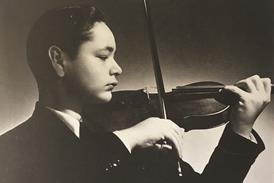




American cellist David Finckel, co-artistic director of the Chamber Music Society of Lincoln Center, reflects on his long association with Samuel Zygmuntowicz, the Brooklyn-based maker being honoured at this year’s CMS Spring Gala
Read more Featured Stories like this in The Strad Playing Hub
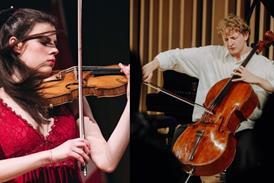
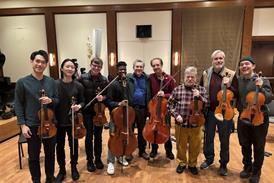
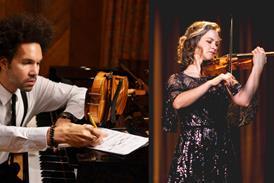
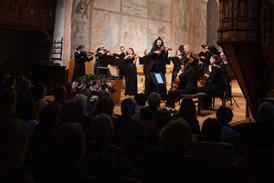
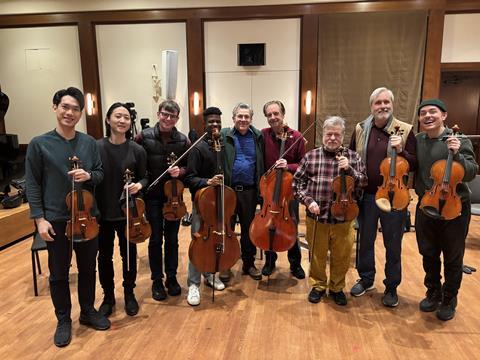
The Chamber Music Society of Lincoln Center (CMS) is marking its 2026 Spring Gala on 19 May by placing a living maker at its centre as it honours the Brooklyn-based Samuel Zygmuntowicz. The programme at Alice Tully Hall reflects the extent to which his instruments have entered mainstream chamber music practice as well as the solo arena, with multiple CMS artists performing on them across a sequence of small-scale ensemble works.
Zygmuntowicz, active since the 1980s, has become closely associated with a generation of performers for whom the distinction between historic Italian instruments and those by living makers has grown less clear-cut. His work has been taken up by soloists including Joshua Bell and Maxim Vengerov, and has long been championed by cellist David Finckel, co-artistic director of CMS.
Often cited as a key moment in changing perceptions of contemporary instruments was the posthumous sale of a Zygmuntowicz violin owned by Isaac Stern, which set a record for a living maker. Finckel spoke to US correspondent Thomas May about his first encounters with these instruments, their role within chamber ensembles and the evolving status of contemporary makers alongside the historic canon.
Tell us about your first encounter with one of Samuel Zygmuntowicz’s instruments. What was your reaction – what made you think ‘wow, this is different’?
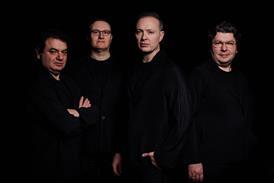
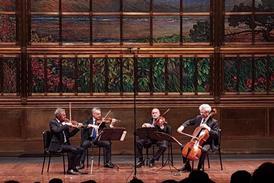
David Finckel: We – meaning me and the rest of the Emerson Quartet – first heard one of Sam’s violins when Eugene Drucker brought it into a quartet rehearsal in 1986. At the time, Gene was playing on an early Stradivari from 1686, and when he showed us Sam’s instrument (he did not reveal the maker), we assumed he was trying a violin from Stradivari’s ‘Golden Period’ (the violin looked old).
When he began to play it, we were doubly sure of our hunch, as it sounded incredible. I remember worrying about him getting into such debt. And finally, when Philip Setzer said, ‘OK, what is it?’, Gene responded drily, ‘It was made by a guy in Brooklyn two weeks ago’, and we all nearly fell on the floor.
You have suggested that Sam’s instruments can be indistinguishable from the finest historic Italian ones. What does that actually feel like in practice – either from the player’s side or from what you hear?
David Finckel: I have more than suggested this. I stand by the assertion that they are indeed indistinguishable from the great old Italian instruments, based on countless blindfold tests involving multiple players, multiple violins including many Strads and del Gesùs, in multiple halls. The sensation of playing an instrument likely varies from one musician to another. I don’t know if people who play Strads, for example, are constantly thinking, ‘I’m playing a Strad!’ while they are in the middle of a concert.
Of more concern to me personally is how the instrument – whatever it is – is responding to the demands I make of it. Is it loud enough? Is the adjustment too tight or loose? Is it changing colour when I need that? Is it offering me the right amount of resistance so that I can dig in when the music calls for it? All these concerns, I dare say, are much more in the forefront of a string player’s mind while playing.
I stand by the assertion that Sam’s instruments are indeed indistinguishable from the great old Italian instruments
What’s happening now in violin making is, for you, a kind of ‘second golden age’. What, for you, defines this period? How is it different from what came before?
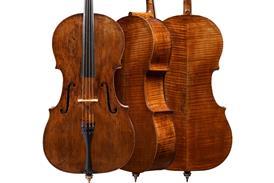
David Finckel: When I ordered my first cello from Sam, in 1987, we agreed that he would copy the famous Stradivari of 1711, the ‘Duport’, which was owned by Rostropovich at the time. This cello was commissioned by a wealthy doctor (likely the personal physician of King Louis XIV), who reportedly offered Stradivari twice his normal fee for the finest cello he could make. So, the ‘Duport’ was the most valuable cello in the world from birth and still is.
Even though I had great faith in Sam’s ability, I asked for my cello to be ‘antiqued’ (with appropriate wear marks that look authentic) and outfitted with a label inside that identified it as the ‘Duport’. I felt it necessary to fool people into thinking that it was old, because at that time most people, including players, were still prejudiced against new instruments.
Since then, this has changed. Those responsible include Sam Zygmuntowicz in a major way, plus all the musicians who have purchased and perform on his instruments. Isaac Stern owned two, for example. I’m proud to have also played a visible role as an advocate for living makers. Sam is not the only great maker alive – he’s had comrades helping to carry the banner for new instruments. But gaining the acceptance of the public was a hard nut to crack, and thankfully that’s been done.
What, in your view, sets Sam apart as a maker?
David Finckel: I have called Sam the Stradivari of our day, and I have little doubt of it. Since I first met Sam back in 1986, he has produced an unbroken stream of superior instruments. His waiting list – if he accepts your commission – is a good five years. If you want to buy a Zygmuntowicz, you can’t, because there are none for sale anywhere – as soon as one comes on the market, it is sold.
There are already people collecting Sam’s instruments. Sam’s consistency, and his upward trajectory, are only similar to the greatest makers of the Cremonese golden age. When that died out in the mid-1700s, it did not return, at least not until now, in my opinion.
Anyone with enough skill and training can make a perfect violin. That’s half the job. But the other half comes from not only years of contact with the world’s greatest violins but also an instinctive feel for how wood is going to behave. From watching Sam work, I’ve seen the way he handles his pieces of wood, tapping them, bending them, obsessively checking the thicknesses, matching wood for the tops to wood for the backs (they are always two different kinds of wood).
Sam had the good fortune to work at the New York shop of Jacques Français for many years under the guidance of the late René Morel, one of the greatest geniuses in the world of luthiers, and through this work Sam came into close contact with many of the greatest old instruments. So, Sam’s skills, combined with his irreplaceable experiences with his mentors and legendary instruments, set him apart.
At the gala, Sam’s instruments will be heard across a range of different combinations. When more than one of them is heard together – something that may happen from time to time at CMS – do you notice a shared sound emerging, or is it more dependent on the players?
David Finckel: The ‘shared sound’ you mention is simply that they all sound good. That said, every one of Sam’s instruments does indeed possess its own sound and personality. He usually crafts instruments for specific players – the commissioners – and before he begins work, he gets to know them personally and musically.
The players all sound different anyway, even when playing the same instrument. That shared sound of Sam’s is a combination of tonal projection backed by the depth and quality of an individual human voice.
You mention the sale of one of Isaac Stern’s Zygmuntowicz violins as a turning point. What actually changed after that?
David Finckel: Sam made a copy of Isaac Stern’s ‘Ysaÿe’ Guarneri del Gesù for him. After Stern’s passing in 2001, there was a large estate sale, and the violin that Sam had made fetched the highest price ever paid for an instrument by a living maker. This single transaction boosted the entire violin-making industry. No living maker could ignore the fact that the market had received a shockwave, and not only did prices go up, but respect for living makers entered a whole new phase.
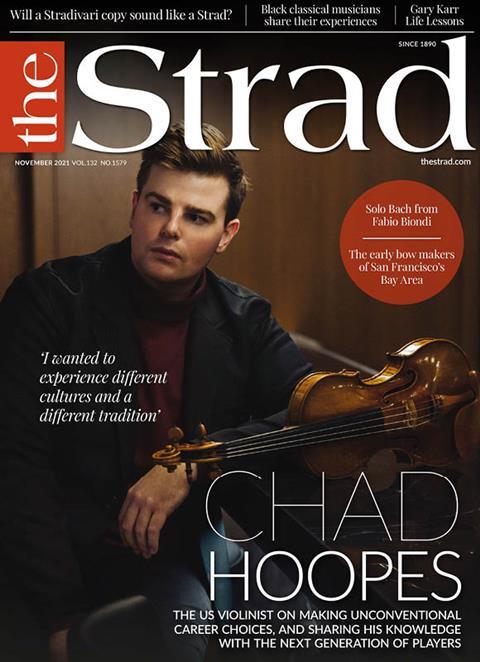
The effect of Sam Zygmuntowicz on the world of music is larger, I think, than most people realise. At the moment, sixteen players who perform regularly at CMS own his instruments (one of them happens to be the violin he made for Isaac Stern, in the hands of its new owner, Chad Hoopes, heard often next to the original ‘Ysaÿe’ del Gesù, in the hands of Benjamin Beilman).
He has literally given us our voices, and this has been life-changing, in terms of growing as artists, communicating with listeners on the highest level, and furthering careers. There has never been a time in history (that I know of) when you could buy one of the best-sounding violins in the world at a price within reach. But that age is now, and I am more than grateful to be living in it.
Read: My Space: Sam Zygmuntowicz
Read: Friends of Musique et Vin announces audition for Zygmuntowicz violin
Read: ‘The value of tradition lies in repurposing the meaningful parts,’ says luthier Sam Zygmuntowicz
Discover more Featured Stories like this in The Strad Playing Hub











No comments yet