




Following the 54th International ESTA Conference in Helsinki, Géza Szilvay reflects on the dual challenge facing string pedagogy: preserving tradition while broadening its horizons
Discover more Featured Stories like this in The Strad Playing Hub
The theme of the 54th International ESTA Conference in Helsinki was ’Bridging the Past and Future of String Pedagogy’. The first panel discussion shared the same title; however, the conversation soon moved beyond its original scope. Taking the liberty of revisiting the topic, I would like to present a number of thoughts, questions, and concerns with the explicit aim of continuing the debate.
A bridge connects different lands, regions, and territories. A mental bridge links distinct domains of thought and practice. Whether physical or conceptual, bridges function horizontally and presuppose diversity. In pedagogy, however, the notion of bridging may sometimes imply controversy. Yet difference is not necessarily controversial.
I view, imagine and conceive of pedagogy – and string pedagogy in particular – as a vertical rather than a horizontal phenomenon. In this context, the panta rhei philosophy, according to which everything flows and changes, is only partly applicable. Violin teaching has constituted an unbroken tradition since the time of Leopold Mozart and Francesco Geminiani in the 18th century. In string pedagogy, I would argue, the enduring, constant and permanent are often more significant than change, novelty, or progress.
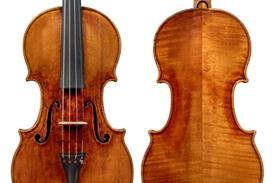
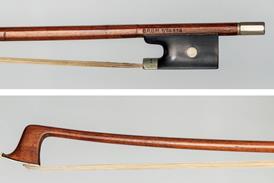
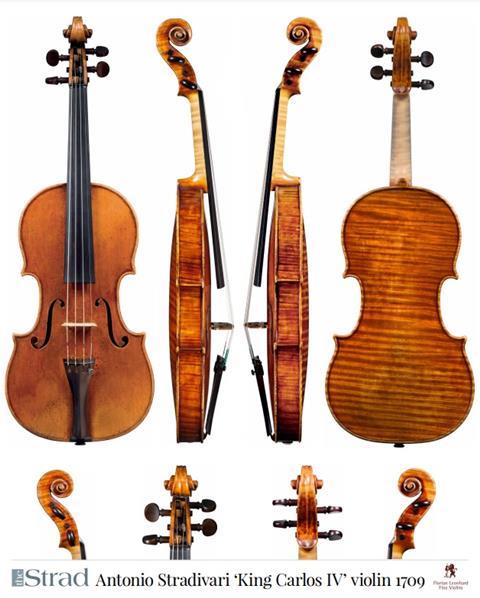
If we examine the development of string instruments within European history, we must recognise that between the Peace of Westphalia (1648) and the Congress of Vienna (1815), the violin, viola, cello, and double bass essentially acquired their present forms. Nicola Amati created what many consider the ideal cello around 1650, while Antonio Stradivari, during his golden period between 1700 and 1720, produced masterpieces that remain unsurpassed and inimitable. François Tourte developed the modern bow around 1800.
Since the Napoleonic era, our string instruments and bows have remained essentially unchanged. The art of making these magical tools sing, speak, whisper, weep, cry, or laugh is fundamentally the same as it was 250 years ago. Any string pedagogue who enthusiastically seeks new and easier paths in our profession should ask: is the new necessarily better than the old?
The once distinct and seemingly opposing Italian, French, Belgian, Hungarian, Russian, German and Bohemian schools have long since merged into a shared tradition, and today’s string players have inherited this invaluable legacy. Our predecessors may have held divergent and sometimes contentious views on bow hold, instrument posture, fingering, phrasing and bowing. Yet time and experience have reconciled many of these disagreements.
We have also inherited certain questionable tendencies. When the Erinyes, the Greek goddesses of discord, stealthily introduced the notion of competition, the amicable and sociable atmosphere of the musical world began to deteriorate. Music is immeasurable. We play with one another, not against one another.
Nevertheless, some pedagogues came to regard competition as a stimulating force, and this belief resonated with a persistent aspect of human nature. String teaching was gradually detached from its original artistic and educational environment, and renowned masters began to work primarily with exceptional talents, with the explicit aim of producing competition winners and future celebrities. The alma mater-like studios of the past were transformed into efficient training environments. The results were breathtaking achievements and admired stars, but also a vast number of disappointed casualties.
Should 21st-century string pedagogy continue along this path?
Seeking and discovering new paths, as well as questioning tradition, is a deeply human impulse. Nevertheless, genuine revolution is not possible in music education, nor should well-established traditions be abandoned. A C major scale will remain a C major scale even centuries from now. Intonation, rhythm, and the fundamentals of technique, with only minor variations, are equally enduring. Future generations of string players will encounter the same essential challenges that students face today.
The primary concern and principal aim of any new pedagogical approach in our century should be to make the tradition of string playing accessible to ever greater numbers of people and, through music, to make the world a better place. These are not mere platitudes. Music truly has the power to transform lives.
At the same time, one must acknowledge a fundamental reality: learning to play a string instrument requires energy, time, effort and sustained commitment from students, teachers and parents alike. No method can escape this fact. Assertions such as ’playing the violin is pure fun’ do not convey the whole truth.
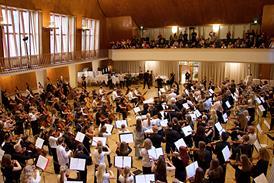
Responsible pedagogues seek child-centred and student-centred approaches that can ease the challenges of learning while preserving its substance. The greatest challenge of modern string pedagogy is how to transform what has traditionally been a solitary form of instrumental instruction into a social and communal experience; how to create a sense of community and make it accessible to many while maintaining high standards and, if possible, achieving all this with a smile.
The greatest challenge of modern string pedagogy is how to transform what has traditionally been a solitary form of instrumental instruction into a social and communal experience
Paul Rolland began to analyse the mechanics of string playing and investigated ways of freeing movement from unnecessary tension. Ottó Szende continued this line of research, and his book The Physiology of Violin Playing remains essential reading for every string pedagogue.
Shinichi Suzuki reintroduced elements of a pre-literate oral tradition into string pedagogy, and his imitation-based approach opened the gates of the musical world to thousands, perhaps even millions, of children. It was a remarkable achievement.
Folk music-based string pedagogy, both for individual students and groups, in which the burden of music reading is initially reduced, has successfully found its place in the curricula of conservatories and higher education institutions. This healthy development deserves continued support and expansion.
The El Sistema approach likewise deserves further recognition. The training of pedagogues who are capable of working with socially disadvantaged children should become an integral part of string pedagogy programmes at universities.
Zoltán Kodály studied the educational ideas of Jan Amos Comenius, who is widely regarded as the father of modern education. Kodály’s famous dictum, ’Music belongs to everyone,’ echoes Comenius’s conviction that “education must be universal.” Both scholars emphasised the importance of engaging multiple senses in the learning process. The simultaneous use of touch (for example, shaping the bow hold), sight (reading), hearing (imitation), and intellect (understanding), an approach also associated with Maria Montessori, was already recognised centuries ago.
Kodály-inspired string pedagogy seeks to maintain a balance between a well-trained ear, well-developed instrumental technique, a sound theoretical understanding of music, and emotional sensitivity. It also embraces Kodály’s well-known message to all educators: ’Only the best is good enough for children.’
These approaches are different, but they are not conflicting. Alongside bridging traditions and ideas, we also need mutual appreciation and respect.
Learning to play an instrument is not only the privilege of children and young people. A music stand may be as welcome in a residential care home as in a school or conservatoire. One can imagine a retired teacher regularly visiting care homes and introducing senior citizens to the joys of making music. In such a community, a simple lullaby, performed each day with trembling fingers, may help to keep both loneliness and illness at bay.
The future mission of string pedagogy is both to deepen its traditions and to broaden its horizons.











No comments yet