




Learning Dvořák’s Cello Concerto was a seminal part of the Spanish cellist’s musical development – and his interpretation is still evolving now
Discover more Featured Stories like this in The Strad Playing Hub.
Read more premium content for subscribers here
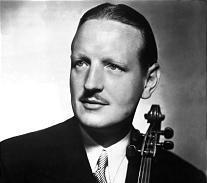
If it weren’t for Dvořák’s Cello Concerto, it’s possible that I wouldn’t be playing the cello today. My father is a professional cellist, but he only picked up the instrument at the age of 18. Before then he was studying science, but he heard the 1937 recording of Pablo Casals performing the concerto with the Czech Philharmonic under George Szell. He quit his studies and began to play the cello from that day forward. And I was born on 19 March, which was the day in 1896 when the Dvořák received its premiere at Queen’s Hall, London – as my dad often likes to remind me! I remember that the Dvořák was held up as the number-one concerto in our household while I was growing up, and it was the great aspiration for me to play it eventually.
I finally got to study it when I was 15, in preparation for a school concert a year later. My teacher Natalia Shakhovskaya was extremely strict, and for six months she only let me practise the first movement, which we went through at an incredible level of detail. She went into the relationships between each note, the harmonic possibilities and how each passage connects into the next. For me it was a great way to learn, because it helped me find the different colours within the piece, and the sensations within the body to bring out the emotion. We hardly talked about technique; it was more to do with finding the emotion first and then working out how the body needs to react in order to convey it.
She also encouraged me to listen to everything Dvořák was writing and composing at the time, while he was working in America, to understand what was going through his mind and what he might have been trying to convey. For me, the concerto is different from anything else Dvořák ever wrote; in places it even sounds like it could be a different composer. The chamber music he was writing at the time sounds very American, with not as many Czech folk themes as he normally used. The concerto, by contrast, sounds more Czech but with hints of these American themes throughout. It’s a feeling I always had while I was growing up: to begin with, I knew Dvořák only from the concerto, and when I learnt his chamber works, I was thinking to myself ‘that’s not Dvořák!’
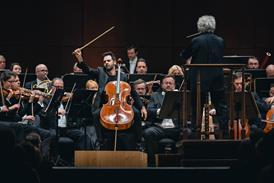
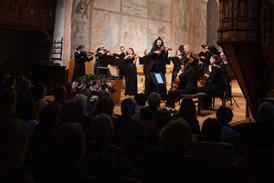
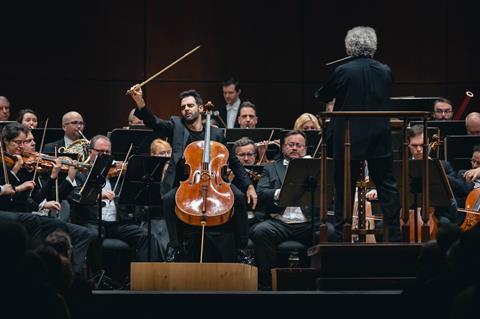
I’ve now played the Dvořák hundreds of times in performance. One of the most memorable times came in 2023, when I played at the Rudolfinum in Prague, with the Czech Philharmonic under Semyon Bychkov. It felt like a homecoming for the concerto, but more than that, the orchestra seemed more attuned to Dvořák’s music than others I’ve performed with. Bychkov was asking for particular details of phrasing that I hadn’t heard before: for instance, just before the cello’s first entrance, the violins have a short, fast phrase that’s always accented on the last note. Bychkov turned it round to have the accent at the start, which gave a much lighter, festive feel to the phrase. Small differences like that add up to a very natural, new interpretation that I love to hear, and which adds to my own understanding of the piece.
There are two things I’d advise students to keep in mind when practising the concerto. First, playing with orchestra is completely different from having a piano accompaniment, more so with this concerto than any other. So you should try to imagine the weight of the ensemble behind you while practising, otherwise it’ll come as a real shock when you’re finally there! Related to this, when practising, you should see if you can play two or three times louder than you think you need to – even in the second movement, which you might think can be quieter, you’re playing against the brass section and you need to be loud! It’s a very long, physical piece, and requires a lot of stamina.
INTERVIEW BY CHRISTIAN LLOYD
Read: Recording Dvořák with an extraordinary cello
Read: Masterclass: Dvořák Cello Concerto first movement
Discover more Featured Stories like this in The Strad Playing Hub.









No comments yet