







The violinist and pedagogue retired from his role at the Zurich University of the Arts on 12 June. Former students recall their time with him, and his inimitable teaching style
Explore more Featured Stories like this in The Strad Playing Hub
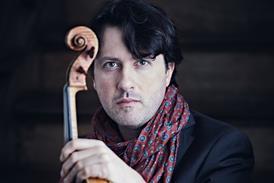
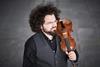
The Dutch violinist and pedagogue Rudolf Koelman recently retired from his position as professor for violin and chamber music at the Zurich University of the Arts (Zürcher Hochschule der Künste, or ZHdK). Having studied with Jan Bor and Herman Krebbers in Amsterdam, he moved to Los Angeles aged 18 on a full scholarship to study with Jascha Heifetz. He has also been first concertmaster of Amsterdam’s Royal Concertgebouw Orchestra, and a professor at the Robert Schumann Hochschule in Düsseldorf.
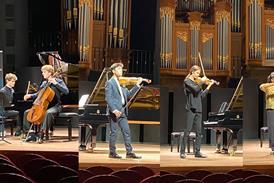
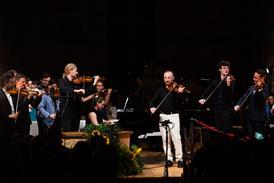
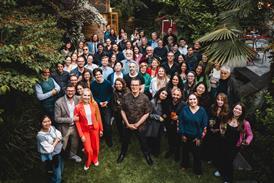
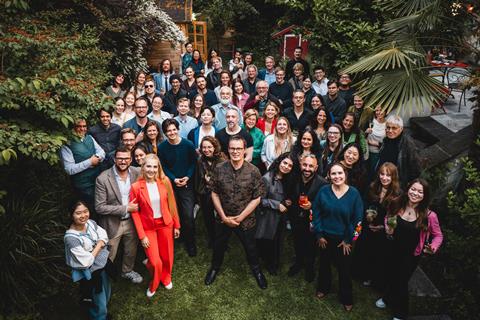
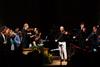
On 12 June more than 150 of Professor Koelman’s students gathered in Zurich to celebrate his retirement from the ZHdK. Below, students past and present give their tributes to their former mentor, including reminiscences of his inspirational teaching style.
Lucía Gutiérrez Gual
Spanish freelance violinist
His lessons were demanding, but his humour was always present, and his jokes became an essential part of the atmosphere
It was a privilege to study with Professor Rudolf Koelman from 2022 until 2026, during the final years of his teaching career. Looking back, I realise how fortunate I was to learn from someone whose musical knowledge, artistic integrity and generosity have shaped so many violinists.
One of my favourite memories is travelling with Professor – as his students affectionately call him – on concert tours in Italy and Taiwan. Seeing him work with his students in a camerata, preparing concerts, rehearsing and sharing music with audiences taught me just as much as our weekly lessons. They created memories and friendships that I will always treasure.
Professor was an incredibly dedicated teacher. I remember one of my violin exams, when I was performing the first movement of the Brahms Violin Concerto for the first time, and my E string suddenly broke in the middle of the performance. I naturally got nervous, but I think he became even more anxious than I was. Before I had time to react, he was already trying to replace my string himself. As I look back, it still makes me smile because it showed how deeply he cared and how invested he was in every performance we gave.
It is often the smallest things that stay with us. When we practise, many of us still hear Professor’s voice: ‘Strong fingers!’ – his constant reminder to keep a firm and active left hand. His lessons were demanding, but his humour was always present, and his jokes became an essential part of the atmosphere in class. And somehow, the spirit of Jascha Heifetz was always present. Whether through a suggested fingering, a recording to listen to, or a reflection on music and life, Professor constantly connected us to the artistic tradition he had inherited. Through him, we understood that learning the violin was not only about technique, but also about becoming part of a much longer musical tradition.
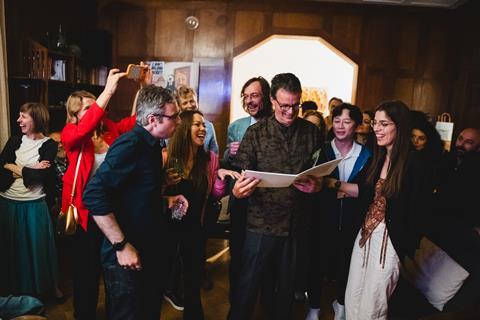
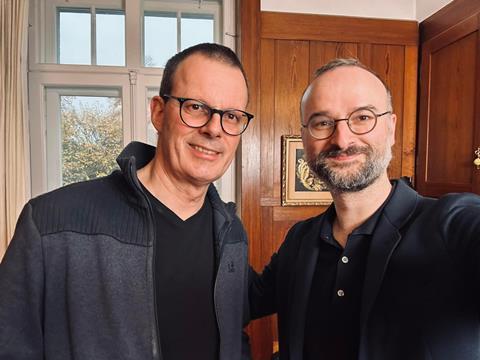
A particularly meaningful moment for me came on 8 June 2026, on Professor’s very last day of teaching. By coincidence, I was his final student. Before leaving, we made a quick tour of his classroom and I took a picture of him beside the door, where he had taught for the past years. At the time it felt very emotional, and in fact it has become a precious memory marking the end of an extraordinary chapter.
Just a few days later, on 12 June 2026, his retirement celebration took place. That was another moment that made me truly understand the magnitude of Professor’s legacy. Many colleagues and former students travelled from all over the world and gathered at his place. Witnessing the affection and gratitude that so many musicians felt towards him was especially moving, and made me realise the extraordinary impact of his work as a teacher. His influence extends far beyond the lessons he gave; it lives on through the many students who carry his musical values and his way of approaching the violin with them.
Professor’s lessons taught me much more than how to play the violin. They taught me to listen, to search, to enjoy the process and to appreciate the responsibility of being part of a musical tradition. Thank you, Professor, for your guidance, your generosity, your humour and your passion for music. I feel incredibly grateful to have been part of the final chapter of your teaching career.
Lina Juknevičiūtė
Lithuanian violinist, artistic director of the Camino Lituano music festival
He made me realise that silence deserves the same care as the notes themselves
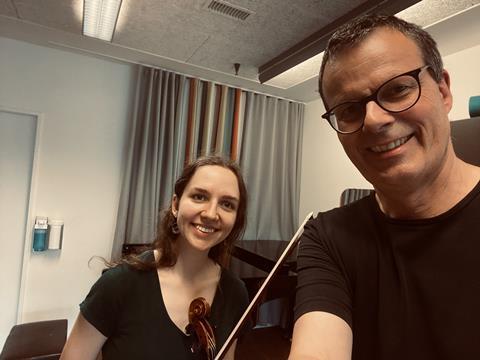
I studied with Professor Rudolf Koelman at the Zurich University of the Arts (ZHdK) from 2023 to 2025. One of the things that has stayed with me most from those two years is how much he taught me about the precision of silence. I remember working on Brahms’s Third Violin Sonata, and after almost every pause he would stop me and ask, ‘Did you hear the noise from the bow?’ or, ‘Did you hear that you placed your finger too early?’ Most teachers encourage you to prepare your fingers before you start playing, but he would often ask me not to do that if it disturbed the silence. At first I found it surprising, but it soon made perfect sense. He paid attention to details I had never even thought about before, and made me realise that silence deserves the same care as the notes themselves.
I also remember my first tour in Italy with the ZHdK Strings, his string orchestra. The local organisers had made a complete mess of the arrangements, but watching Professor Koelman handle the situation taught me something just as valuable as any violin lesson. He remained patient, professional and respectful throughout. I will always be grateful for that example, both as a musician and as a person.
Kateryna Timokhina
Swiss–Ukrainian violinist, founder of the Swiss Violin Studio
What made his class so special was that he never wanted to change your individuality
‘Strong fingers!’ – a phrase every Koelman student heard more than once!
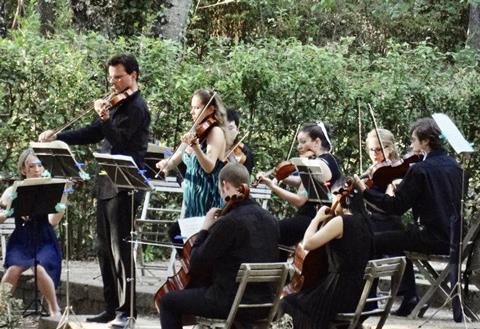
It was an incredible privilege to study for seven years with Professor Koelman, from 2007 to 2014. I remember that he could perform every Paganini Caprice with astonishing skill, always with his handwritten urtext score in front of him. Whenever you played something differently – a staccato instead of a legato, a different dynamic, or simply something that was not written in the score – he would take out his score and say: ‘Wait, Paganini didn’t write that.’ And then he would show you just how precisely Paganini had written everything. For me, his Paganini recording remains one of the most remarkable interpretations I have ever heard.
I also greatly enjoyed working on Bach with him. Professor Koelman was a true advocate of being faithful to what is actually written in the score. He taught me to look at the music almost like a policeman – constantly checking myself and correcting things I might have learnt simply out of habit, or having heard it somewhere.
What made his class so special was that he never wanted to change your individuality. Everyone retained their own musical personality, but they learnt to express it with respect for the composer’s intentions.
On 12 June, former students and friends from around the world gathered in Winterthur (CH) to celebrate Professor Koelman’s retirement. It was a wonderful reflection of the respect, warmth and gratitude he inspired in so many of us.
Emanuele Zanforlin
Swiss violinist, Modulor Quartet
He inherited from Heifetz a focus on the pillars of violin playing: sound colour, intonation, force of expression
My studies with Rudolf Koelman lasted from 2018 to 2021. He had a profound influence on me, even before I began studying with him. In my earlier years I used to listen to his recordings with the typical violinistic awe of someone who knew that he had studied with Heifetz. The influence of his master is indeed very evident in his playing, and this gives both his artistry and his teaching considerable historical significance. Being among his last students, we can truly say that Professor Koelman’s retirement marks the end of a violinistic tradition that is becoming increasingly rare.
Among the many qualities of his musical and pedagogical approach, the most immediately striking was undoubtedly his playing. For a teacher with such command of the instrument, the sole practical demonstration could be of immense value to a student willing to observe carefully. Beyond that, it seems to me that he inherited from Heifetz – and ultimately, through him, from Auer – a focus on the simple yet eternal pillars of violin playing: sound colour, intonation, force of expression. These three elements – which, despite their apparent simplicity, occupy every violinist for a lifetime – were addressed in a kind, yet remarkably straightforward manner. One could always expect a response that reflected the actual quality of one’s playing, largely uninfluenced by personal moods or other extraneous considerations. I consider this objectivity to be one of the defining qualities of a great teacher. Likewise, he would never burden a student who was already going through a difficult period with unnecessary or unproductive criticism. His innate kindness and genuine human sensitivity naturally prevented this.
On a purely musical level, Professor Koelman was always searching for inspiration. One could immediately tell from his reaction whether the playing had convinced him or not. Once inspired or impressed, he would give everything to foster the student’s development. An equally interesting situation arose when his musical curiosity was awakened by ideas with which he initially disagreed. In those moments, genuine discussion became possible, first through rational argument and then through practical experimentation. If the process proved successful, the student had achieved something.
From a technical perspective, he spoke with remarkable precision about the physical sensation of intonation. I remember him explaining, in relation to a large shift in Bruch’s Second Violin Concerto, how he would mentally and physically anticipate the note, the sound and the exact spot on the fingerboard before playing it – what Ivan Galamian referred to as the principle of ‘correlation’. Indeed, his exceptional ear and uncompromising attention to intonation were among the defining features of his teaching. At the same time, he was capable of being the most open-minded and generous listener whenever the musical and emotional conception was sufficiently convincing.
He is one of the kindest and most encouraging teachers I have ever known. Nevertheless, he was extremely demanding and capable of pushing the pupils to give their best. The standard within the class was exceptionally high and students regularly performed virtuosic repertoire, like Paganini, Ysaÿe and the major violin concertos. The pace of the lessons was intense and the number of pieces we were expected to prepare was substantial. It was therefore possible to build a solid repertoire within a relatively short period. Our professor would listen attentively, identify the critical passages and then, with characteristic kindness, ask: ‘What else?’
Yet perhaps one of the most important aspects of his teaching was the living connection to Heifetz. This was by no means a dogmatic adherence to a particular tradition; rather, it was the transmission of a violinistic school through intelligent, often unconventional and brilliant fingerings, an exceptionally free and functional approach to bowing in the Romantic repertoire, and an overall sense of facility on the instrument. From him we inherited countless ideas regarding fingerings, bowings and sound production – for example, the idiomatic, highly saturated tone produced close to the bridge with little bow in intense passages – some of which were his own, while others undoubtedly from Heifetz himself.
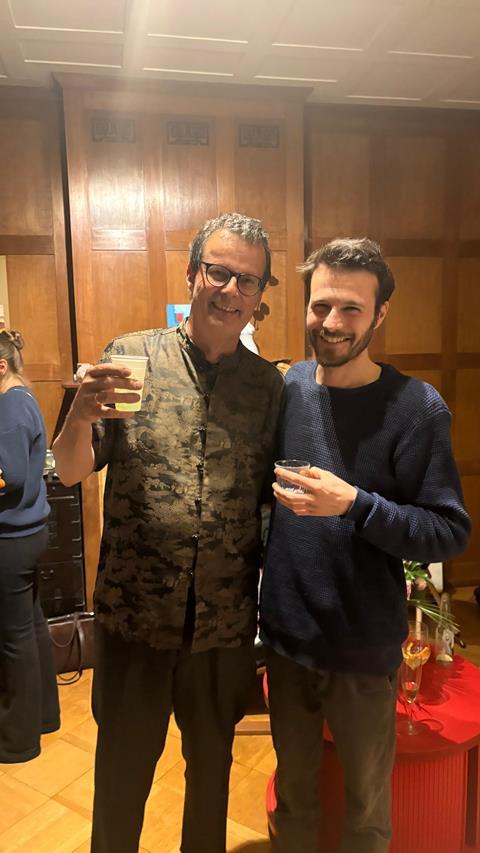
Of course, the countless stories and anecdotes he shared about Heifetz were also part of his lesson, with which he enriched not only our understanding of violin playing but also our broader conception of music. For me, these experiences were always fascinating and today represent a form of historical testimony of considerable value. On 12 June he gave a retirement party at his home in Winterthur. After receiving the honours from the school department and giving a short official speech, the party had been going on for a few minutes when he picked up a microphone connected to a loudspeaker so that everybody could hear. ‘I forgot to tell you something,’ he said, addressing his students. ‘I am proud of you all.’
Daniel Kurganov
Belarusian–American concert violinist and music educator
Professor Koelman’s training involved a ruthless sensitivity to small details
I studied with Professor Koelman from 2011 to 2013 in Zurich and Winterthur. The first time I heard him play live, it was in a studio class and he was sitting behind me. He demonstrated something and I felt as though the spirit and sound of Heifetz was emanating from behind me. It was the kind of sound I had dreamt of: full of intimate nuance, drive, diamond-like clarity and an utterly vocal conception of connection. This felt like an art that has, quite frankly, all but died out. He has inspired me to pursue the unmatched level of sound quality of the old masters, as well as to share my understanding on YouTube and elsewhere.
Of course I recognise the phrase ‘Strong fingers’! It refers not only to articulation and clarity, but also to how the fingers carry the conviction of the phrase. It can also mean the bravery of using risky fingerings for maximum expressive effect.
Part of Professor Koelman’s training also involved a ruthless sensitivity to small details that can destroy the line. We would repeat a seemingly simple line, and we received ‘No’ after ‘No’ after ‘No’. There would always be just one small thing that kept it from becoming magic, which we were required to find before moving on. I pass on this ‘radar’ to my students, so they can create the sound that is in their imagination.


















No comments yet