
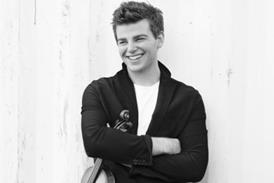


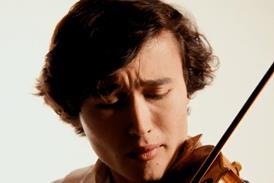
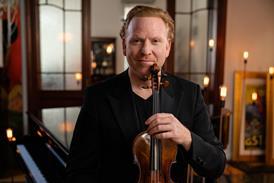

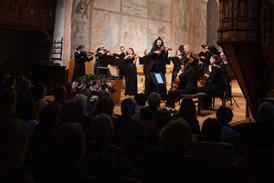

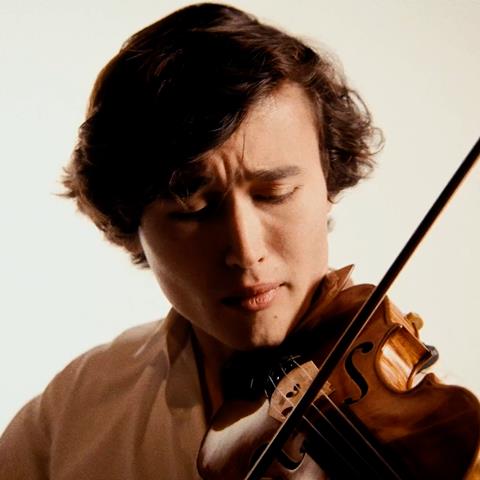
Daniel Lozakovich speaks to The Strad about his new album Lost to the World, which comprises a deeply personal programme inspired by early memories, poetic masterpieces and a decade-long musical partnership with pianist Hélène Mercier
Read more Featured Stories like this in The Strad Playing Hub
On 6 March 2026, Daniel Lozakovich releases his new album Lost to the World on Warner Classics. The album is inspired by Lozakovich’s own reflections on childhood and the redeeming power of music, placing cornerstones of the Romantic repertoire – Fauré’s Après un rêve, Handel’s Te Deum, Rachmaninoff’s Vocalise, Tchaikovsky’s Nocturne in D minor and Mahler’s Ich bin der Welt abhanden gekommen – alongside arrangements of French chanson – La chanson d’Hélène, Autumn Leaves and Youkali.
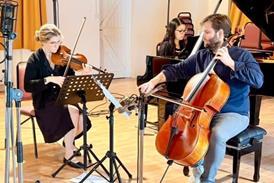
Lozakovich recorded the album – his second since signing with Warner Classics in 2024 - with pianist Hélène Mercier, a collaborative partner he has known for more than ten years. He speaks to The Strad about his poignant programmatic choices.
Your album draws heavily on childhood memories and dreamlike impressions. Is there a childhood memory that still resonates in the music you’ve chosen for this album?
Each of these pieces was born in specific early moments of my life. They gave me an impulse of new emotions that in some ways have hugged me in times of need.
I chose the pieces that gave a direct impulse to the heart, pieces that touched a string inside me. I wanted to create an album purely from the heart, music that in some way gave me new meaning from the first moment I heard it.
This album, Lost to the World, is inspired by Friedrich Rückert’s poem, which is the text behind Ich bin der Welt abhanden gekommen by Gustav Mahler. That piece comes at the end of the album. It has inspired me deeply in life, there is such a heartbreaking sense of solitude, but at the same time a very strong sense of hope. It truly saved me in difficult times.
It was always a dream for me to perform Mahler, so I made my own transcription of this piece.
On this album there are works not usually played on the violin, but I love them so much that I had to find a way to express them in a different voice. I believe it is not the instrument that expresses, you express your whole heart and soul through the instrument. That is what is most important, not the instrument.
In the album liner notes, you write about silence as something music teaches us to understand. How does silence shape your interpretation and performance, and what does it mean to you in a world that feels increasingly noisy?
You can only hear the language of the heart in silence. And silence is not just silence for the sake of it. The great silence is when you understand why it is happening.
The greatest moment in life is when you connect heart to heart. That is what culture is, heart to heart. And silence teaches us this. We remember more and feel more deeply when something happens in silence.
The value of music is not measured by how loudly people shout or applaud. It is the silence that gives it value, that people have come to truly listen. That is our greatest mission as musicians. We paint silence to create something true to the heart, something that expresses what the composer wanted to say. To create silence in a way that light may appear in our hearts.
The best concerts I have experienced are those where you feel saved, where you discover feelings you didn’t know existed within you, and suddenly receive an impulse to live life with more grace and sincerity. I believe in that because I have been saved in that sense.
It is never too late to save one person, especially through music. We never know whose hearts we may ignite in a concert. That is why it is a great responsibility to treat music as a mission, because people come to listen and offer their silence and attention in search of meaning. Music is the greatest medicine, it has the power of an immaterial cure for the soul and qualities of revelation.
We remember more and feel more deeply when something happens in silence
You and Hélène Mercier have known each other for more than ten years. What is it about her musicianship and personality that makes your collaboration feel so natural and so rare?
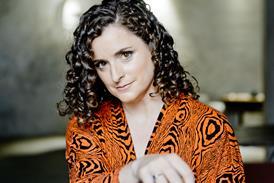
Hélène Mercier has performed alongside many of my favourite legends of music, including Mstislav Rostropovich, Ivry Gitlis, Vladimir Spivakov and Henryk Szeryng.
Her sister was a violinist, so she has had an intimate relationship with the instrument since childhood. She has a very unique way of listening, and that experience makes it very natural to express together.
What truly drew us together is that we both believe in the spiritual. She has faith and is a person with soulful curiosity. Beyond music, there is a friendship that creates a deep trust and understanding between us.
We have known each other for more than ten years. From the very first moment we met, and after our first concert in Kyrgyzstan in September 2023, my mother’s birthplace, there was a feeling of immediate musical communion and intuition.
Every album I have recorded is very personal. I have only done it with people who are close to my heart, whose presence resonates and gives me inspiration.
The album spans Romantic masterpieces and French chanson. What guided you in selecting these pieces, and how do they express the themes of solitude, hope and inner truth that run through the project?
I wanted an album that expresses as many different sides of dreams as possible. I was inspired by the poetry in these masterpieces and in the chansons, the texts are so touching. They carry a smell in the heart that gives me belief in the stars.
They are soulful pieces of music. And music is not about categories. For me, it only matters what touches the heart.
In the play Mozart and Salieri, Alexander Pushkin describes Mozart with three golden words: depth, structure and courage. These qualities connect to everything in culture and are what is most important to achieve. It can be any category, but it must be an expression of sincerity.
If it were a rock or jazz piece or whatever with that same value, I would play it too, of course, if it suits the violin.
My favourite example of music without boundaries is Jeff Buckley singing Dido’s Lament. A rock musician singing in his own way, yet sometimes even more truthful than many classical interpretations, because of the love and passion he expressed through the piece.
That is what matters most.
Lost to the World is released on 6 March 2026 on Warner Classics. Watch Daniel Lozakovich and Hélène Mercier perform Fauré’s Après un rêve in the video below.









No comments yet