








Suzuki pedagogue Helen Brunner considers the importance of preparing the environment for young learners, and why we should surround our children with music from the start

Discover more Featured Stories like this in The Strad Playing Hub
Read more premium content for subscribers here
Recently, I returned from five intense violin days in Cremona. Currently, there are 200 luthiers registered in that little Italian town. If you want to be a violin maker, this is your place. You can visit the Museo del Violino and study at the Casa Stradivari, lunch at Ristorante Il Violino and stroll down the Via Guarneri del Gesù. Luthiers chat together in the cafés and bars: earnest clusters of like-minded artisans sharing their expertise. It is all in the environment.
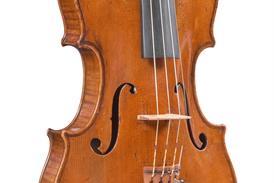
In October I brought a violin to Cremona, made by Girolamo Amati II in 1670. At that time, he lived next door to his young friend, Antonio Stradivari. Their families used to work and eat together, just part of the violin making community. Nothing much has changed. This environment works for luthiers.
Now consider how we raise our young musicians: so many solitary lessons, lots of struggle and lonely practising. Could we instead design an environment where music surrounds them? The renowned teacher Edward Kreitman noted that in the first 20 minutes of the original instructional videos, Shinichi Suzuki mentioned the word ‘environment’ 18 times. We must create the right environment for our students where music becomes the air they breathe.
Can you imagine every daycare and nursery school playing classical music all day long, quietly in the background? There are countless indications that music increases our feelings of calm, focus and joy (there have been promising trials in railway stations, prisons and dementia-care facilities, for example).
How beautiful it would be if, by the time they reach kindergarten, every child could sing at school every day. We can show class teachers how to achieve this with the simplest materials. Teach the children songs with lots of repetitions, and action songs for the playground. The trick is that it has to be every child. If we start selecting the so-called musical ones, we lose inspiration and the value of the peer group. The pedagogue William Starr said that every child can sing despite evidence to the contrary. To quote my wise mother: ‘Children should sing and dance all day long until they are five.’
When parents enter my studio, they join a lively WhatsApp group. There they keep in touch with each other and watch their children’s progress. The children take care of one another and sympathise, and so their violin friends become their best friends. Parents can also access me on WhatsApp in those bewildering early days to help them build the environment. I used to have a sign by the front door: ‘Warning: if you ring this bell, your life will change’!
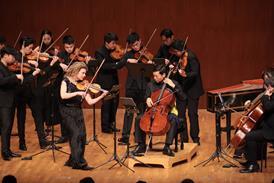
Suzuki used to say, ‘One teacher plus one pupil equals a bad education.’ Lessons should always be in masterclass format, not one-to-one. In our community, we strive to maintain Suzuki’s form – with a private lesson (accompanied by a parent) and also a group lesson every week. Violin becomes a family priority. Numerous other musical activities are offered – early childhood classes for Suzuki babies, orchestra and chamber music for the teenagers, trips for the young children, tours and workshops, regular masterclasses, home concerts, public concerts, summer schools and impressive international galas with more than a thousand Suzuki performers.
For teenagers, it is all about the peer group. When we organise international tours for a dozen students they never ask questions about solos, repertoire or the visiting country. ‘Who else is going?’ is all they want to know. For them, this is the environment.
My hope is that all children can be surrounded by music all day long. It is good for the soul and good for the planet. Create the right environment and music will thrive in their hearts.
Read: ‘Twinkle’ always makes me cry: a Q&A with Suzuki trailblazer Helen Brunner
Discover more Featured Stories like this in The Strad Playing Hub
Read more premium content for subscribers here











No comments yet