


The most important musical ear a string player can develop might be the one that they can never physically possess themselves, says violinist, violist and teacher Alex Laing
Discover more Featured Stories like this in The Strad Playing Hub
Read more premium content for subscribers here
‘Use your ears.’ This must be one of the most common instructions given by music teachers. My violin tutor, Warren Jacobs, certainly said it to me all the time. Before playing, I had to close my eyes and hear the sound I wanted in my head. Really hear it: the phrase, the colour, the slide, perhaps Kreisler playing it rather than me.
It was extraordinarily powerful teaching, and I use it now with my own pupils. If you can hear it, you can play it: desire the sound strongly enough and somehow the physical process organises itself. Perhaps we listen so intently that we stop interfering with the body and allow it to do what it already knows how to do. There is something rather Yoda-like about it: there is no ‘try’, just ‘do’.
Over the years, however, I have found myself exploring what ‘use your ears’ actually means. There is a paradox in playing the violin: the violinist can never hear their instrument from where it was designed to be heard. The sound under our ears has travelled only millimetres; the sound we want to create may need to travel a hundred metres.
I have, of course, been told to think about this throughout my training. Teachers and chamber coaches talked about projection and imagining the sound at the back of the hall. Knowing something because you have been told it, however, is different from discovering it for yourself.
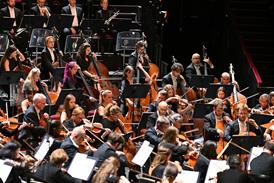
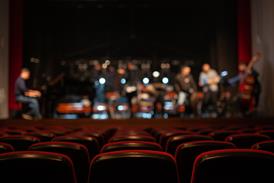
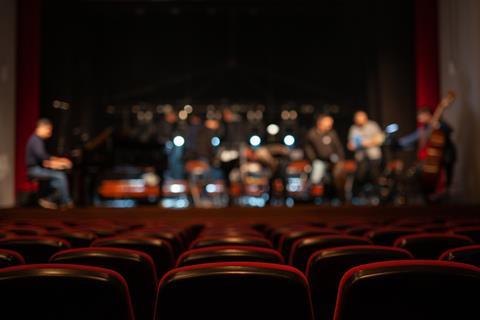
Years ago, I took some pupils to a Maxim Vengerov masterclass in the Duke’s Hall at the Royal Academy of Music in London. Sitting only a few yards away, I was struck by the physicality of his sound. It was astonishing: massive, but there was grit and dirt in it too. I took myself to the back of the hall. The grit disappeared. What remained was an extraordinary clarity of articulation.
This crystallised something for me. I had spent years developing the ear Warren had taught me to use: the one that imagines the ideal sound before it exists. The second ear hears what emerges. The Vengerov experience made me understand the importance of a third: the ear at the back of the hall, the only one a player can never physically possess.
I now try to create that discovery for my pupils rather than simply tell them about it. They need to listen to other players from different places and, when playing themselves, ask people they trust what they hear and experience how their own sound changes with distance. Eventually, something slightly perverse can happen: they begin to enjoy the ugliness under their ear. The grit they once tried to remove becomes something they may actively seek, because experience has taught them about the beauty it can create elsewhere.
The real skill, however, is not simply acquiring the three ears. It is teaching the ears to adapt to each other. A small, dry room, a concert hall and a resonant cathedral all change the equation. Just as bow speed, arm weight and contact point exist in a constantly changing balance, our three ears must continually recalibrate what we imagine the sound to be, what we hear close by and what we believe is reaching the audience. That matters physically too. The violin can be hugely loud under the ear. Fear of that volume can make a player restrict the sound, tighten the body and, paradoxically, work harder to produce less. An educated third ear gives us the confidence to let the instrument go.
There is generosity in this way of listening. I was taught to listen intently to the sound inside my head. I still begin there. Performance, though, ultimately asks us to turn that attention outwards. We are not playing principally for the ears nearest the violin. We are, after all, supposed to be entertaining everyone else.
Read: Opinion: Why students should rehearse with musicians other than their teachers
Read: Opinion: SongHa Choi on ‘aura’ in live performance
Discover more Featured Stories like this in The Strad Playing Hub
Read more premium content for subscribers here











No comments yet