



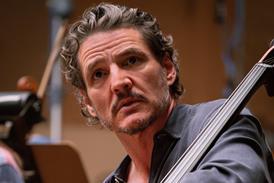
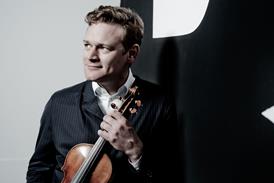






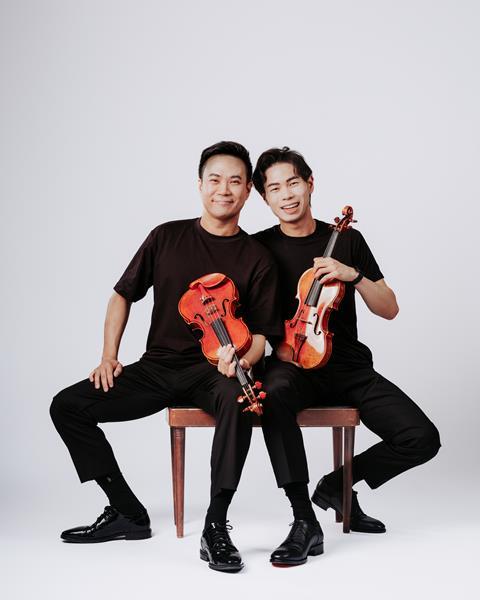
Nikki and Timothy Chooi speak to Davina Shum about their new album Double, featuring repertoire dedicated to two violins that has served as an accompaniment to their lifelong musical journey together
Discover more Featured Stories like this in The Strad Playing Hub
Plenty of recordings exist of violin repertoire – particularly of concertos, sonatas and solo works – but what about repertoire for two violins? Perhaps it can be said that violin duets and works for two violins and piano are performed a lot in domestic and informal settings, as well as for pedagogical purposes, but not recorded as much as other staples.
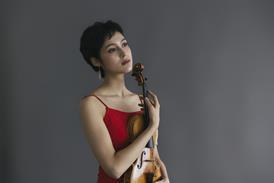
Brothers and violinists Nikki and Timothy Chooi are set to release their debut album as a duo on 16 October, in a culmination of the siblings’ lifelong intertwining musical journey. Entitled Double, the album is dedicated to the instrumentation of two violins, comprising works by Prokofiev, Shostakovich, Moszkowski, Leclair, Sarasate and Dvořák.
With such successful musical output from both brothers – both are prizewinners and laureates of top competitions, such as Queen Elisabeth, Michael Hill and Joseph Joachim; while Nikki is concertmaster with the Buffalo Philharmonic and Santa Fe Opera and Timothy is a professor in Ottawa with an international performing career – what was their early musical environment like growing up?
The siblings have lived their musical lives side-by-side since childhood. Nikki, who is five years older than Timothy, was exposed to plenty of different sports and activities, the violin being one of them. Nikki gravitated towards the violin, embarking on the Suzuki Method and influencing his younger brother by the time he came along.
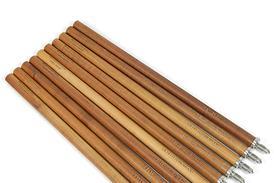
‘The fact that my brother was doing something, I felt like I needed to do it too,’ says Timothy. He recalls watching Nikki playing his violin for hours ‘in a Batman costume’ while mimicking his older brother playing using a pair of chopsticks.
Nikki pays tribute to the Suzuki books for their early love of collaboration: ‘We played a lot of Suzuki tunes together – the first two books are kind of built for that.’
With both brothers carving out separate careers in different locations, how did the idea for a duo album come about? The project had been in the pipeline for a long time, but one that had been pushed to the side for many years as other projects took precedence. At some point after the Covid pandemic, they decided ‘we’ve got nothing to lose at this point’ so they decided to book a studio and start.
In terms of programming, they chose works that had been part of their lives for a long time and had performed a lot, such as the Prokofiev sonata, which they performed at Nikki’s graduation recital at the Curtis Institute of Music in 2012, as well as Shostakovich’s Five Pieces for Two Violins and Piano and Moszkowski’s Suite for Two Violins and Piano. Additionally, they were arranging works for the instrumentation.
‘People started asking us “where can we get the music?” “Where can we hear you play this regularly?” “Are you on streaming platforms?” And finally, we just got into the studio and started recording.’
The works showcase the breadth of the repertoire – from the virtuosity of Sarasate’s Navarra to the stately Baroque style of Leclair. Nikki states that while these pieces have been a part of their lives for so long, the recording represents just a snapshot of this point in their lives. ‘Who knows what it’s going to sound like in ten, twenty years down the road, collaborating on the same pieces.’
The album was recorded in two stints over 2024 and 2025 in Guarneri Hall in Chicago, a meeting point for the two brothers that held personal connection to them, due to their friendship with the venue’s artistic director, Stefan Hersh. Hersh also served as the recording’s producer.
‘Stefan was a wonderful producer,’ says Nikki. ‘He kept everything very calm. If something needed to be repeated, we just did it again. And we trusted ourselves. We have played this repertoire many times over the years in many different situations, meaning we had an interpretation that was unified. So the recording process was very comfortable.’
With a wide range of styles represented on the recording, which pieces stand out to the players? For Timothy, it’s Shostakovich’s Five Pieces for Two Violins. ‘It’s almost like a little anthem that Nikki and I have played whenever someone asks if we can play something. It’s one piece that’s very approachable for everybody, making it very potent from a musical standpoint.’
For Nikki, it’s the homecoming choice of Dvořák’s Humoresque, arranged by their friend and American composer, Sheridan Seyfried. The work is well known, particularly due to its appearance in Book 3 of the Suzuki Method books.
‘Every time I hear that melody, it brings me back to my childhood. That’s one of the reasons I had asked Sheridan to arrange it for two violins for us to play, because we’d done it many times during our childhood, whether it be in a group lesson or a final year concert. So it grounds us to where we came from.’
An environment of playing at home, group learning and a lifetime of musical companionship. ‘It’s an album where the pieces are played a lot in everyday lives, but not recorded necessarily,’ says Timothy. ‘Hopefully it inspires some siblings out there that they can play together without getting into fights!’
Double is released on Orchid Classics on 16 October 2026.
Read: ‘The more talent and perspectives, the better’: David Finckel on Beethoven’s piano trios
Discover more Featured Stories like this in The Strad Playing Hub












No comments yet