

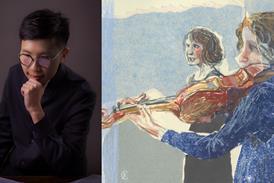


Composer Ng Yu Hng on how he came to find inspiration from the idiosyncrasies of the Baroque violin, viol and viola da gamba, and what contemporary classical composers can learn from these period instruments
Read more Featured Stories like this in The Strad Playing Hub
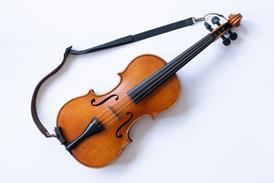
A few years ago, I visited a friend of mine, Emma-Marie Kabanova, who is a fine Baroque violinist. We spent several hours discussing early music and the peculiarities of the Baroque violin, which to the untrained eye and ear, may innocuously pass for its modern descendant.
I recall this delightful memory because, at the time, I was in a creative cul-de-sac and my encounter with period string instruments began a journey that would help me better articulate my compositional craft in the years after. These instruments possessed a refined voice of interiority, one that could offer ways for contemporary composers to ponder about our craft and its future as a living tradition.
There is a graceful restraint in Baroque music that deeply attracted me, and it is no clearer than in the string technique of messa di voce, which confers Baroque strings their distinctively smooth dynamics curvature. The term, which in Italian means ‘the placing of the voice’, reflects an oft-understated concern of Baroque composers and their Renaissance predecessors: the voice, with all its melodic articulations and inflections, remains central as an expressive vehicle even for instrumental music.
This concern with the voice can be found in other period string instruments, such as the viol, which I first encountered when collaborating with the Fretwork Viol Consort at the Dartington Festival. Viols are valued for their fidelity to the human voice. Jean Rousseau, in his 1687 Treatise on the Viol, lavished praise on the instrument: ’The human Voice… never has an Instrument imitated it as well as the Viol…’ Today, many contemporary viol consorts perform Renaissance choral works, to no loss of their vocal expressivity.
But unlike composers of the past, contemporary composers rarely write principally for voice. The reason is simple: the voice best articulates melodies, but there is a deficit of melodic writing in contemporary music’s post-tonal idioms. Perhaps it is long overdue that we return to melodic writing, a musical element so primordial to the historic Western classical tradition.
The voice best articulates melodies, but there is a deficit of melodic writing in contemporary music’s post-tonal idioms
The viol does not merely imitate the voice’s timbre, but also its social and cultural resonances. The 18th-century viol player Hubert Le Blanc magisterially described the instrument as ’resembling the tone of voice of an Ambassador, which is not loud, and is even a little nasal’. The comparison makes sense in historical context. Early modern European diplomacy involved closed meetings in intimate chambers. As Rebekah Ahrendt points out, the viol’s introverted timbre, alongside its associations with high culture and education, was inextricably linked to the aristocratic world that produced early modern diplomats.
For contemporary composers, the viol’s association with aristocratic households is also worth pondering. Its stature had historically encouraged composing that foreground civility and refinement. In a modern compositional landscape that privileges the expression of individuality and passionate activism, have we forgotten to behold careful craftsmanship and beautiful sound?
My final encounter was with the viola d’amore while collaborating with Rachel Stott, a prolific composer and performer of many period instruments. She commissioned me write a piece for Sopriola, a duo consisting of her and the lovely soprano Rachel Godsill. The instrument’s timbre is one of quiet beauty and interiority. Leopold Mozart described it to as ‘especially charming in the stillness of the evening’.
The viola d’amore’s harmonics have a delightfully resonant, lontano tone. When plucked, it produces a soft harp-like sound. Most fascinatingly, sympathetic strings tucked under the main strings could be played as an extended technique, creating chords reminiscent of a miniature viol consort, like a chamber group hiding within a solo instrument.
The interiority of the viola d’amore, as well as many other period string instruments, should inspire us to embrace intimate, domestic performance spaces beyond the confines of the public-facing concert stage. As late as the 19th century, Parisian salons, elite social gatherings held in private homes, allowed classical music to thrive. Have we lost sight of the domestic sphere as a place of great music-making and intellectual ferment?
Given the slow, tragic withdrawal of contemporary classical music from the public eye, and its steady ossification within academic institutions, perhaps it is long overdue that we revisit the principles that allowed period string instruments and their musical civilisation to flourish and survive even to this day. The past has much to teach us after all.
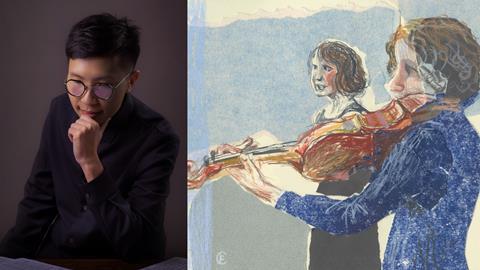
Ng Yu Hng’s collaboration with Emma-Marie Kabanova will see various performance in June and August 2026 as part of the Continuing Voices Tour. See more information about the composer here.











No comments yet