
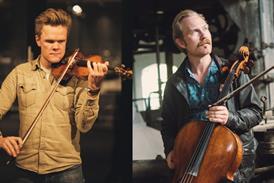
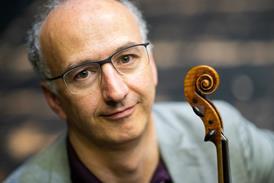
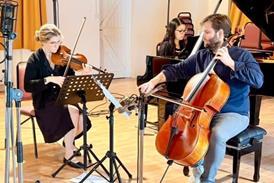

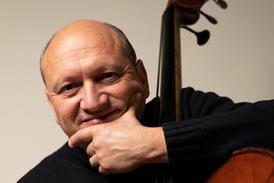


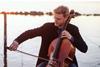
Four years on from his stage 4 cancer diagnosis, Jacob Shaw, professor of cello at the Royal Northern College of Music, reflects on what the experience forced him to prioritise and the realities of returning to performing in an industry that forgets quickly. The journey is recounted in the upcoming documentary Where Music Grows, which follows Shaw’s Scandinavian Cello School
Read more Featured Stories like this in The Strad Playing Hub
It’s the sort of story you never imagine will happen to you. In early summer 2022 I came off stage after performing for the former Queen of Denmark, Margrethe II, and collapsed.
Only hours earlier I had been doing what I had done for most of my life – walking on stage with a cello and playing a concert. Shortly afterwards I was diagnosed with stage 4 cancer: Burkitt’s lymphoma.
I had no idea that it would completely change my relationship with music. In our profession there is always an unspoken pressure to keep going, no matter what. Illness, exhaustion, personal life – none of it really fits neatly into the machinery of a concert career.
This experience made me reassess what we prioritise in this industry – often-superficial things such as rankings and reviews. And whether someone goes through my journey or not, this shift in perspective is something we could all benefit from. Not only does it expose the more unfortunate sides of our industry, but perhaps more optimistically, highlights the power of what we do as musicians. And it’s something we often take for granted.
Only a few days later, after being transferred to a specialist ward in another city, the reality began to sink in. I remember starting to vomit yellow and green bile and thinking that perhaps, just this once, I might have to cancel a concert. As the engagements started to fall away, the treatment began. Burkitt’s lymphoma is one of the fastest-growing cancers in the world. The treatment is correspondingly brutal: a huge amount of aggressive chemotherapy, endless transfusions, and essentially fighting the disease as hard as it fights the body.
During the treatment my weight dropped to 50kg. Watching doctors and nurses work around the clock gave a completely new meaning to the phrase ‘support our healthcare workers’. A view out to the hospital car park did not exactly contribute to the best period of my life.
What got me through were visits from my partner – who at the time was heavily pregnant with our second child – our two-year-old daughter, close friends and students, and a constant soundtrack from the Danish classical station DR P2, BBC Radio 3 and Classic FM. When I had spinal taps I refused to let them turn the music off. My doctor used to chuckle: ‘Maybe we should implement this in the whole hospital.’ It was pretty much the only thing that made those moments bearable.
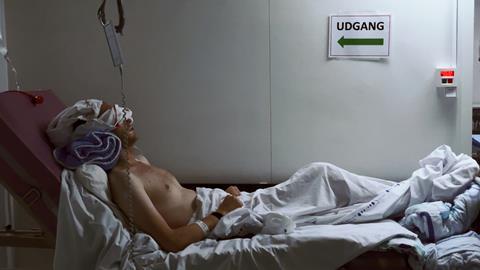
Most of the staff knew what I did professionally, particularly after our Scandinavian Cello School (SCS) project had gone viral. And so one day they came in excited to tell me that a ‘classical’ concert would take place in the visitors’ room. It was bizarre to suddenly find myself on the receiving end of an outreach concert. The nurses rolled me in and propped me up while a violinist and guitarist played through Danish songs and a selection of Disney melodies. In the six months I spent in that ward, that concert was the absolute highlight.
I will never look at outreach concerts in the same way again. For someone with my background to be so deeply moved by live music in that moment made me realise how powerful it must be for someone hearing live music for the first time. Sitting there, I promised the hospital that if I survived this nightmare, I would come back and play for them.
Treatment can save your life. But nobody really talks about what happens afterwards. For a long time I couldn’t imagine returning to the cello at all. I didn’t open the case for months. When I finally opened the case again, the smell of the wood and rosin was strangely familiar and completely distant at the same time. This object that had been part of my body for decades suddenly felt like it belonged to another life. It wasn’t that I couldn’t play. It was that I couldn’t be bothered. The climb back to where I had been felt like an enormous mountain, and I had no desire to fight my way back into an industry that might simply decide I was now a ‘has-been’.
One of the uncomfortable truths about our profession is that if you disappear – because of illness, family, or simply life – the industry rarely waits for you. Programmes get filled, agents move on, audiences forget. None of this is malicious; it is simply the machinery of the business continuing to turn. But when you are lying in a hospital bed wondering whether you will survive, it becomes very clear how small that machinery actually is.
It took more than a year before I was drawn back to playing again, and even then only in situations where I felt absolutely certain the music meant something. I started organising concerts across the region – in pubs, fishing huts and village halls. This time it wasn’t just a charming idea like playing for cows. It felt like the reason I had survived. Music had become something I wanted to share with people in a different way: to help them reflect on life, to cope with life, to celebrate life.
At the same time I became almost obsessed with making the SCS project stronger – tightening operations at what we call ‘The Musical Farm’, finding funding, building something that could survive even if my recovery didn’t. And as I once became more involved with mentoring the young musicians passing through SCS, it forced me to confront a simple question: what exactly are we preparing young musicians for – and what kind of lives are we helping them build?
With a young family, stability suddenly mattered more than it ever had before. I took on a visiting role at a German university, became international chair of cello at the Royal Welsh College of Music and Drama and became a professor at Manchester’s Royal Northern College of Music (RNCM). The latter turned out to be exactly the missing piece in my life. The institution shares many of my values about where the music world needs to go and how we can build something healthier for the next generation of musicians. My weekly journeys to Manchester have become one of the highlights of my life and have slowly helped me fall back in love with music again.
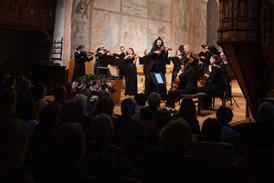
Only recently have I started performing in concert halls again. This season is the first time since 2022 that I’ve returned to concerts where audiences have bought tickets and come specifically to listen.
Sitting on stage and looking out at an audience, you never know what is going on in the lives of the people in front of you. But something I had never really thought about before is that on the other side, they never know what is happening in yours.
We sit there and give everything in public. But do they know the back story? Do they realise what it took to arrive on that stage, or what nearly stopped it from happening at all? They are questions we probably don’t ask often enough – either as performers or as listeners.
Nearly dying has a brutal way of clarifying what actually matters in music. A lot of what we spend our lives worrying about in this profession suddenly looks very small. Competition rankings. Reviews. Careers. Reputations. All the things that feel enormous when you are inside the industry. When you’ve been lying in a hospital bed wondering if you’re going to survive the year, they look very different.
Did it change the way I play the cello? Completely. But would I go back and change what happened to me? I don’t think I would.
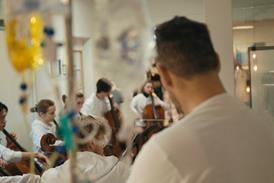
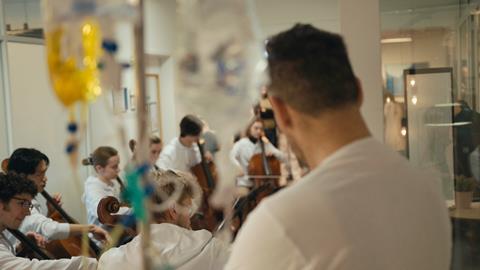
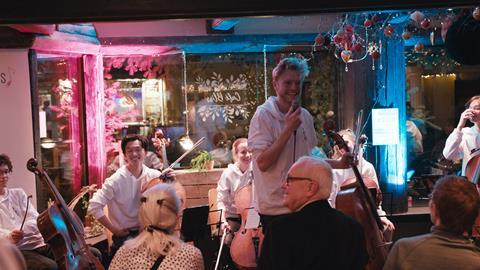
The documentary Where Music Grows premieres on 14 March at Copenhagen’s CPH:DOX film festival. Stay tuned on The Strad website for the film’s trailer. Ahead of the film, the SCS Cello Ensemble will release Edith Piaf’s ’Hymne à l’amour’ on 13 March, which was performed during their visit to the hospital where Jacob was cared for, as featured in the film. Pre-save the single here.







No comments yet