



Fresh from his victory in Brussels, the Italian cellist chats with Davina Shum about competition preparation and challenges, making bold repertoire choices, and his unique chance to play on Casals’ cello for four years
Discover more Featured Stories like this in The Strad Playing Hub
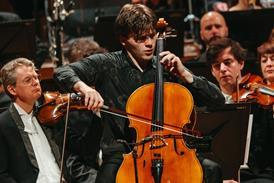
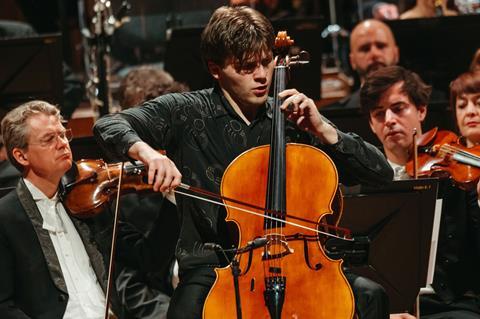
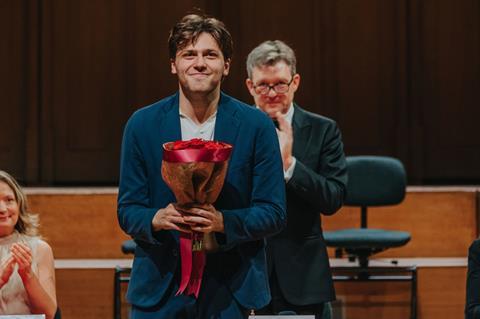
It’s Sunday morning, not even twelve hours after the proclamation of the laureate rankings of the 2026 Queen Elisabeth Cello Competition, and I’m chatting to the first laureate Ettore Pagano, at the competition’s headquarters in Brussels.
It’s been a whirlwind evening for Pagano, who greets me having had only two hours of sleep, and faces a whole morning of press engagements, before acquainting himself with his new instrument as part of his victory – the 1733 Matteo Gofriller ‘Casals’ cello – as well as preparing for laureate performances next week.
The 23-year-old Italian took the top prize following an intense week of final-round performances that saw a huge focus on 20th-century concertos. As well as the competition’s imposed work, Four odes to the tidings of flowers by Fang Man, he also played Prokofiev’s mammoth 40-minute Sinfonia concertante, op.125. That’s a total of more than one hour of playing for the final round, and a culmination of nearly a month in the Belgium capital.
‘I feel like it’s been a year since I arrived,’ the Berlin-based cellist says, sipping on an espresso. ‘At the same time, the time flew very fast, but I’ve done more in this past month than I’ve done in the last two years of practising!’
This is not a surprise, given the high standards and demands of the competition. He stresses the physical toll that competition preparation has taken on his body, as well as his mind. He says that during his time at the Queen Elisabeth Music Chapel, where the finalists are locked into seclusion to learn the imposed work over seven days, his body was telling him to stop practising so intensely: ‘Everything was hurting in my body. My fingers, my chest, and my back especially.’
The strategies for competition success are well documented for athletes – incidentally there was plenty of sport happening across Europe this weekend, with a 20km run occurring through Brussels as we spoke, as well as Paris Saint-Germain’s victory over Arsenal in the Champions League in Budapest the previous evening, not to mention the ongoing tennis at Roland Garros in Paris – but what about physical strategies for musical competition success? Pagano’s performances over three rounds totalled around three hours of playing. How did he maintain his energy and stamina?
Pagano made use of gym sessions over the past month, which he describes as ‘very useful’, particularly as he learnt from previous competition experiences where he recalls having to perform through back pain.
‘The physical side of things is extremely important, just as much as the musical and mental aspects. I also started to have a meal routine with healthy food, which is incredibly important.
‘We use the whole body as cellists. For that reason, it’s important to get some exercise at the gym.’
With a heavily contemporary programme, Pagano emphasises practising mindfulness before going on stage. ‘It’s tiring, mentally,’ he says. But it’s worth it to be part of the generation carrying the flame for new music and bringing it to the concert hall. He sings the competition’s praises for pushing contemporary music to the fore, particularly with the final round imposed work by Fang Man, as well as the semi-final imposed work Caffeine by Harold Noben.
Famously, the unique element of the competition is the seclusion the candidates experience when learning the imposed work, with no access to technology or the outside world. ‘It was like going back to when I was 12 or 13, when I didn’t have a phone.
‘The first two days were really slow. I could feel every second in my body. But then the time was also going extremely fast. It was great to meet people for the first time and have conversations with them. They’re all great people, and we are all winners.’
Ettore also attributes better sleep to having no phone access, which he feels ultimately helped his performance and concentration. But when he found out that the previous cello candidate who occupied his room was Hayoung Choi, winner of the 2022 edition, he felt ‘emotionally recharged’.
‘I had to do the same as her!’
All the candidates had extremely limited and precious rehearsal time with the accompanying Belgium National Orchestra, and its conductor Anthony Hermus. Aside from initial run-throughs, there were only scarce few minutes to rehearse details.
‘When you don’t have time, you have to be very direct. Almost a bit rude, really, and not too polite or spend a lot of time explaining why you want something.’ He praises the energy he shared with the conductor, as well as Hermus’s ability to accommodate the three different interpretations of Sinfonia concertante that were performed that week.
Perhaps choosing Prokofiev was a bold choice, given that it’s not a concerto that performed or programmed often. Why the Sinfonia concertante?
‘It’s much more than a concerto,’ he says. ‘There is much more dialogue with the orchestra and you have to change character based on what instrument is playing.’
He describes the work as humoristic, sarcastic, powerful and virtuosic. ‘The most important thing is that you have to make the audience feel that there are masks you wear in different places. It’s a bit like acting.’
These, combined with the work’s mix of neo-classicism and modern-Romanticism make the Prokofiev the best work to bring to a competition, in Pagano’s opinion.
Perhaps with something more traditional, such as the Dvořák Cello Concerto, one’s interpretation has to be liked by everybody in order to be successful – because every listener will have their own expectations – while the lesser-known Prokofiev can provide more of a blank canvas for personal artistry.
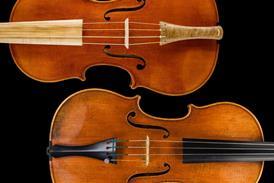
Pagano is now tasked with getting used to the 1733 Gofriller cello, on loan to him for four years from the Pau Casals Foundation. He plans to use it at his laureate performance next week. ‘I was told [the Gofriller] is very beautiful, but a bit hard,’ he says, while flexing his left-hand fingers.
Pagano says adjusting to the Gofriller will be very different from his modern cello, which was made for him in 2024 by Wiltfrud Fauler and based on the 1711 ‘Duport’ Stradivari cello, formerly played by Rostropovich. He explains that the modern cello was the best choice for his competition rounds, with its direct and focused sound, necessary for powerful works such as the Prokofiev, or the Schnittke sonata he played in the semi-finals.
Now he has the luxury of choosing between two fine instruments – old and new. ‘You change a lot with an instrument. It’s a relationship and the instrument also changes with you.’
It’s only just beginning for Pagano, both in his journey with this historic instrument, and for what will hopefully be a fulfilling career: ‘I think it will make me a better player.’
Read: Reflections on the Queen Elisabeth Cello Competition with 2022 winner, Hayoung Choi
Read: Results announced at the 2026 Queen Elisabeth Cello Competition
Discover more Featured Stories like this in The Strad Playing Hub









No comments yet