





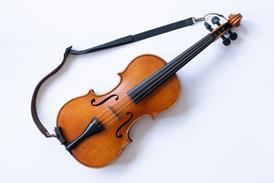
Kamasa, who helped shape the landscape of Polish viola playing, was 96
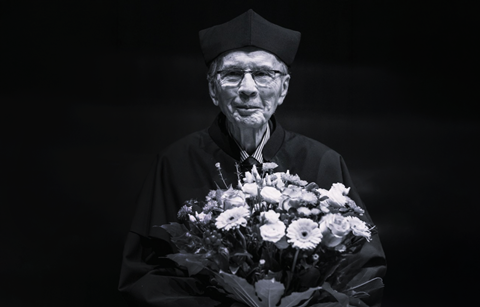
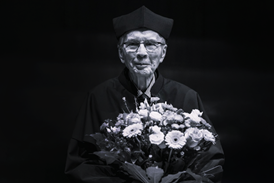
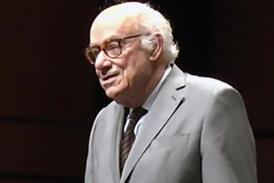
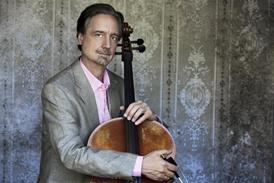
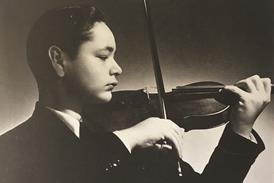
Polish violist Stefan Kamasa died on 12 May 2026, aged 96. He was one of the most important figures in Polish viola playing, enjoying a career as a soloist, chamber musician and professor.
Kamasa began playing the violin aged nine, but switched to viola, completing his music studies at the Higher School of Music in Poznań, where he was awarded a diploma with distinction under the tutelage of Jan Rakowski. He pursued postgraduate studies with Tadeusz Wroński in Warsaw and received a scholarship from the Ministry of Arts and Culture to study further with Pierre Pasquier in Paris.
He made his solo debut in 1954, performing Bartók’s Viola Concerto with the Warsaw Philharmonic Orchestra, under the baton of Andrzej Panufnik. In 1957, he won first prize at the National Jan Rakowski Viola Competition in Warsaw.
With over 30 viola concertos in his repertoire, he then embarked on a prolific performance career, playing in over 30 countries across the world and appearing at festivals in Salzburg, Berlin, Moscow, Prague, Zurich, Versailles, Baden-Baden, La Chaise Dieu, Alicante, Lourdes, Mexico and Warsaw.
A pioneer of new music, he premiered works by Polish composers, including Grażyna Bacewicz, Tadeusz Baird, Roman Palester and Krzysztof Penderecki. For Baird’s Concerto Lugubre, Kamasa received a French Diapason d’Or prize, and the Orfeusz prize for his performance of Bacewicz’s Viola Concerto at the Warsaw Autumn Festival.
As a chamber musician, he played with the Warsaw Quartet for 23 years, as well as the Polish Radio and Television Quartet. He performed with ensembles including the Tchaikovsky Quartet, Silesian Quartet, Wilanów Quartet, Camerata Quartet and Varsovia Quartet, and collaborated with artists including Jean Pierre Rampal, Marina Yashvili, Marielle Nordmann, Maureen Forrester, Sherban Lupu, Krzysztof Jakowicz, Jerzy Lefeld, Ivan Monigetti, Janusz Olejniczak, and son, Paweł Kamasa.
Kamasa received numerous awards and distinctions, including the Officer’s Cross of the Order of Polonia Restituta, the Knight’s Cross of the Order of Polonia Restituta, the Gold Cross of Merit, and the Gold Medal for Merit to Culture – Gloria Artis.
He served as chairman and jury member at competitions in Munich, Budapest, Pörtschach, Bordeaux, Evian, Essen, Markneukirchen, Mittenwald and Poznań. As an educator, he was professor at Warsaw’s Fryderyk Chopin University of Music since 1958, educating generations of recognised violists. He was awarded the title of honorary doctor from the institution in September 2025.
He also gave numerous masterclasses in Vienna, Leipzig, Stockholm, St. Petersburg, Düsseldorf, Gdańsk, Karlsruhe, Łańcut, Żagań and Zakopane, and gave lectures in Krakow, Wrocław, Poznań and in Tarbes, France.
Violist Kinga Wojdalska, Kamasa’s final student at Warsaw’s Zenon Brzewski Music High School, described her professor as ’not only an extraordinary artist and musician, but also a deeply caring teacher. He truly believed in every one of his students.
’Before competitions or important performances, he would of course still teach and correct details, but most importantly, he knew how to give confidence. At a certain point he would simply say: “You are very well prepared,” and suddenly everything felt possible.
’Even after graduation, he always remained interested in his students’ lives and achievements. He was genuinely happy to hear about our progress and successes.
’The last time I played for him was in October [2025]. I brought Grażyna Bacewicz’s Sonata No. 2 for Solo Viola and Penderecki’s Viola Concerto. He remembered these works as if he had practised them the day before. He helped me discover new colours in the music and shared memories of his meetings and collaborations with both composers, which made the experience unforgettable.
’I always loved visiting him. He was an incredibly kind soul, warm, optimistic, and full of life. Being around him was inspiring not only musically, but also personally.’
Read: Obituary: cellist Henrique Fernandes (1927–2026)








No comments yet