



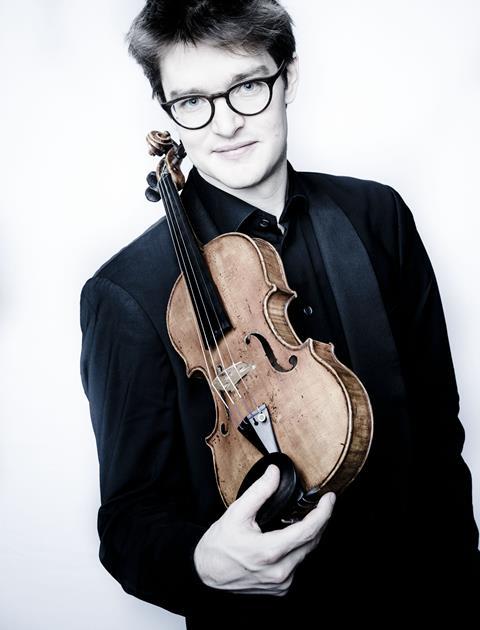
Hugo Ticciati, director of O/Modernt, reflects on imaginative programming, genre‑crossing pairings and how music can be experienced as a physical, lived encounter as much as an intellectual one
Read more Featured Stories like this in The Strad Playing Hub
It is increasingly common to conceive of classical concerts and albums in terms of narrative and thematic trajectories. As a programme curator, my overriding concern is with how the stories and emotional journeys unfold. In this sense, I am always asking myself how a variety of compositions – however diverse in character – can relate to each other as building blocks in an overarching structure.
Such relationships can be aural – sound worlds that complement each other in the act of listening. The connections can be stylistic, motivic or tonal, but they can also be more abstract, drawing on atmosphere and dramatic development, for instance.
This opens up contrasts, whether subtle or extreme, extending from delicate shades of meaning to binary opposites – darkness vs light; quiet meditation vs explosive power. Adopting similar strategies to those used by composers, imaginative programming employs repetition, variation and contrast.
Intellectual frameworks can also play an important role, as long as they are not overworked, to the point where they can only be enjoyed on paper, because a concert (or album) is above all a lived experience.
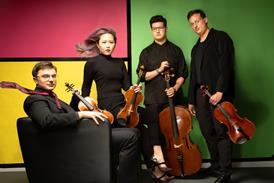
Accordingly, over the years, the shaping of my programmes has increasingly been guided by my heart and body, with the intellect taking a back seat. Indeed, I am drawn more and more to the physicality inherent in musical encounters. As performers, we create sounds through movements that often display dance-like qualities, and nothing gives me greater joy than to see my fellow musicians throwing their bodies into the music.
Nothing gives me greater joy than to see my fellow musicians throwing their bodies into the music
Listeners also react corporeally to the sounds they hear, but their physicality is tacitly discouraged in Western classical concerts, which developed as an adjunct of museum culture. As a result, concert-goers are all too often confined in static bodies, unable to swing and gyrate to the music in natural ways.
It goes without saying that the contrast with other genres is stark. Jazz and rock concerts for instance, pulsate with physically animated audiences. I’ve explored the physical aspect of performative listening by programming tracks by Nirvana alongside pieces by Philip Glass, to quote one example among many.
Glass’s modus operandi shares affinities with rock and pop, but something very special happens when the liberating rhythms of Nirvana empower a classical concert audience to get involved physically.
A track by Nirvana loosens restraints, setting bodies in motion and transferring energy through the crowd. Once activated, the physicality stays alive and is then felt and enjoyed in the work by Glass. More generally, I used to talk about innovative listening, but now I prefer to the idea of embodied listening.
Personal history can also help to reinforce the narratives connecting works in a concert. Depending on age and background, audiences react to Nirvana (or Radiohead, The Beatles or Sting, to mention a few other recently programmed artists) in highly individualised ways.
The works often evoke nostalgic memories of other epochs in people’s lives – episodes of love, rebellion, or growth. This sense of personal involvement lets listeners take possession of the music, opening a space for a more intimate engagement with the rest of the programme.
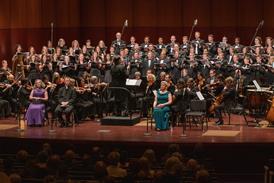
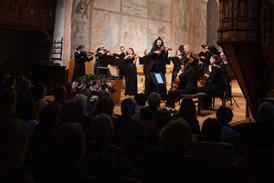
As well as mixing genres, I also like to deconstruct a key work, isolating its stylistic elements and exploring their history and characteristics in my programming, so that the work is unpacked, so to speak. A recent example was a concert given at Wigmore Hall in January 2026 by the O/Modernt Chamber Orchestra, when the key work was Brahms’s String Quintet No. 2 in G Major Op. 111 (arranged for string orchestra).
The glorious arch of the piece incorporates three distinctive stylistic elements: Hungarian folk music, Slavic melancholy and Viennese waltz. Featuring works by Ligeti, Kodály, Bartók and Dvořák, together with recent compositions by Vlad Hirlav Maistorovici and a Strauss waltz, the first half of the concert playfully and pre-emptively deconstructed the borrowed elements deployed by Brahms.
The idea was to provide an emotionally engaging exposition of the forces driving the quintet, which was played after the break. Brahms’s musical storytelling was thus contextualised and enhanced with a variety of companion pieces that broadened and deepened the soundscape.
Embodied listening and imaginative pairings are the lifeblood of O/Modernt’s latest album, Milestones, which was conceived in 2021, when there was a triple anniversary of passings – 500 years since the death of Josquin, 50 since that of Stravinsky, and 30 since the loss of Miles Davis. Their individual sound worlds, which display unforeseen similarities, were combined as an expression of O/Modernt’s creative philosophy.
The name O/Modernt, which means ‘Un/Modern’ in Swedish (the language of O/Modernt’s birthplace and home), signals the bringing together of old and new music. Recognising no borders, all music is approached as sounding expression, and the boundaries demarcating genres, periods, traditions and so forth dissolve into a continuum.
This does not imply the erasing of all artistic differences in a flood of equalising eclecticism. On the contrary, each and every individual style and genre of music is celebrated on its own terms. Accordingly, O/Modernt’s decontextualising impulse is balanced with a respect and love for particular musical identities through imaginative programming, which allows ostensibly distant or even incompatible genres to rub shoulders with each other in surprising juxtapositions.
The principle is exemplified on Milestones. Josquin, Stravinsky and Davis are widely celebrated for their avant-garde energy, which has profoundly impacted generations of listeners. Their achievements thus rank as epoch-making milestones in the development of Western music.
The perennial newness of their work is recaptured on the album in a running order that highlights expressive contiguities and sonic similarities (modal and rhythmic), as well as inherent contrasts. In other words, the recorded works are assembled using the same principles of repetition, variation and contrast mentioned above. The distinctive soundscape is realised by a fused classical and jazz ensemble, together with specially commissioned arrangements of the pieces by Davis and Josquin.
As in my concert programming, the unorthodox musical interactions on the new album are designed to challenge habitual expectations. Broadly speaking, my intention is to reveal the inherent strangeness of canonic works and allow sounds from novel or remote traditions to manifest an uncanny familiarity.
The guiding spirit is always one of curiosity, openness and – à la O/Modernt – earnest playfulness. That trait is also vividly present in the music of Josquin, Stravinsky and Davis, the three composers featured on Milestones.
Hugo Ticciati and O/Modernt perform at Wigmore Hall on 28 April 2026. Milestones is released on Signum Classics on 22 May 2026.
Read: Earth Day with ecofeminism: exploring nature-inspired works by women composers
Read more Featured Stories like this in The Strad Playing Hub







No comments yet