- News
- For Subscribers
- Student Hub
- Playing Hub
- Directory
- Lutherie
- Magazine
- Magazine archive
- Whether you're a player, maker, teacher or enthusiast, you'll find ideas and inspiration from leading artists, teachers and luthiers in our archive which features every issue published since January 2010 - available exclusively to subscribers. View the archive.
- Jobs
- Shop
- Podcast
- Contact us
- Subscribe
- School Subscription
- Competitions
- Reviews
- Debate
- Artists
- Accessories


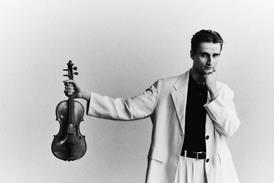







Session Report: violinist Théotime Langlois de Swarte on recording ‘Le Violon de Rameau’

Théotime Langlois de Swarte tells Harry White how Le Violon de Rameau, his new album with William Christie, restores the violin to the heart of the composer’s musical world
Jean-Philippe Rameau’s relationship with the violin is an intriguing paradox. Today, his name remains inextricably linked to opera, the keyboard and music theory. Yet one of the rare surviving paintings of the composer – Portrait de Jean-Philippe Rameau, attributed to André Joseph Aved and now in the Musée des Beaux-Arts de Dijon – depicts him not at the harpsichord but holding a violin. Rameau may have written nothing for solo violin with basso continuo, yet the instrument is an animating principle throughout his orchestration, especially in the dances of Les Indes galantes and Castor et Pollux, where, in the words of French violinist Théotime Langlois de Swarte, it assumes ‘a centrally important role’…
Already subscribed? Please sign in
Subscribe to continue reading…
We’re delighted that you are enjoying our website. For a limited period, you can try an online subscription to The Strad completely free of charge.
* Issues and supplements are available as both print and digital editions. Online subscribers will only receive access to the digital versions.
Keep informed