


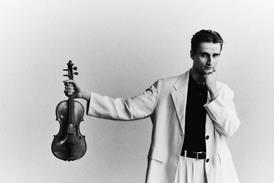
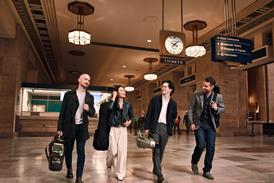












Daniel Rowland, the artistic director of the Stift International Music Festival, reflects on the music and his connection with the celebrated composer, as the festival prepares for its 2026 edition

Discover more Featured Stories like this in The Strad Playing Hub
It is such a great pleasure to talk about the unique, spiritual, deeply moving and, in the times we live in, profoundly important and existential music of Pēteris Vasks. I have had the privilege of knowing Pēteris well and developing a very special and cherished friendship with him over the last ten years. His music has become a central and deeply inspirational part of my own musical journey.
The first piece of Pēteris that I fell in love with, almost 15 years ago, was one of his great masterworks, Distant Light. I believe it is one of the towering violinistic masterpieces of the last 30 or 40 years, written, of course, for Gidon Kremer and recorded so powerfully by that great master.
I was asked by the Stellenbosch Festival in South Africa, around 2015 or 2016, to perform Distant Light. I dived deeply into the music and was completely blown away by its scope, both violinistically and, above all, emotionally: this endless struggle between the forces of darkness and light.
You encounter the trilogy of elements that are so central to Pēteris’s music in that piece. There is his love of nature: birdsong, sunrise, the beauty of our gorgeous planet. There is, perhaps even more importantly, spirituality and his deeply felt faith. And at the heart of everything is his belief that deep love can conquer the forces of darkness.
For Pēteris, love is never something sweet or sugary, like in a Hollywood movie. He speaks about deeply felt, pure love, which also contains an element of power. Deep, powerful love is at the very core of his music.
Shortly after performing Distant Light, I had the great pleasure of meeting Pēteris at a festival in Denmark, where my wife, the wonderful cellist Maja Bogdanović, and I had the privilege of working with him for the first time, on the deeply moving violin-cello duet Castillo Interior. Once again, the forces of darkness and spirituality clash, but ultimately love and belief conquer.
From that first meeting, in a beautiful Danish castle in the countryside, our relationship and friendship grew. A few years later, in 2019, Pēteris became composer-in-residence at my Stift International Music Festival in Holland. Every year at the end of August we invite a composer-in-residence to spend time with us, and over the years we have had composers including Olli Mustonen, Osvaldo Golijov, Roxana Panufnik and Isidora Žebeljan. Having Pēteris with us was something particularly special.
During that Stift Festival, I recorded Distant Light, together with Lonely Angel, for a homage CD to Pēteris. He was deeply involved in the project, and it was profoundly inspirational to play this great music with the composer himself there in front of us and with my friends in the Stift Festival Orchestra.
A couple of years later, Pēteris returned to Stift, and I had the privilege of premiering his Sonata Estiva for solo violin. It is a piece full of joy, radiating Pēteris’s love of Latvian folk music and song. When he handed me the score and played the piece for me on a little upright piano at a festival in Norway, he told me that he had wanted to write something light and joyous, celebrating the songs and dances of his native Latvia.
Then the horrible war began, with Russia’s aggression against Ukraine. Pēteris wondered whether he should transform the piece into something dark, a wartime work. But he decided the opposite was true. He would celebrate the folklore and traditions of Latvia, but also those of beloved neighbouring Ukraine. In celebrating song and dance, he would stand up to aggression.
At that same Stift Festival, my Arethusa Quartet had the joy of working with Pēteris on his Sixth String Quartet. Once again, this music feels like a life story. His father, a pastor in the Latvian church, chose to remain in his homeland rather than leave, as many others had done, and to continue preaching to his own people under Soviet oppression. This made a profound imprint on Pēteris. The feeling of what he calls ‘the monster’ – the darkness, oppression and threat from the great neighbouring power – is always present in his music.
At this year’s Stift Festival, we will be playing a great deal of Pēteris’s important music, across chamber orchestra, chamber music and solo repertoire. Among the works we will perform are Memories of Childhood for violin and cello, his Second Violin Concerto, In Evening Light, his Sixth String Quartet, and his glorious Second Cello Concerto, Presence, alongside various other chamber works, both large and small.
We will give the Dutch premiere of Memories of Childhood, a co-commission with the Sylt Festival, where Claude Frochaux and I premiered it only a few weeks ago in Pēteris’s presence. It begins with an elegiac prelude, written by an eighty-year-old man who realises that much of his life lies behind him, followed by ten relatively light-hearted miniatures reflecting different aspects of childhood. They are light-hearted, but never superficial; they are full of substance, tenderness and meaning.
Pēteris said to me, ’Daniel, even when I try to write something light-hearted, it still usually turns out in a minor key.’ When I asked him why, he simply replied that perhaps it was because, even in moments of lightness, the danger from the neighbour is always there. He has mentioned this so often, and it tells us so much about the world he has lived through.

We will also give another premiere: his Second Violin Concerto, In Evening Light, written in 2022 for Hugo Ticciati. I have lived with this extraordinary piece for the last months and have dived deeply into it. Pēteris told me that, at this stage in his life, he wants to focus less on the forces of darkness and more on the power of love.
Much of the 35-minute concerto feels like looking upwards – towards a higher dimension, towards heaven, perhaps towards what Pēteris deeply believes is waiting for us in another life. There are glorious, uplifting passages, but also moments of darkness and turbulence. The ’monster’ is still there. The second cadenza takes us to extraordinary heights of virtuosity, with Pēteris exploring the full gamut of violinistic possibilities, never for effect alone, but always to build drama and tension: sometimes towards spirituality and love, at other times towards danger and threat.
And then, as in some of Pēteris’s greatest works, the music ends with a feeling of transfiguration – of flight, of passage towards heaven, towards another dimension. It is deeply moving.
I simply cannot wait to share all this music. Over six or seven concerts, beginning on Sunday 23 August with Pēteris’s Piano Quartet, Maja will perform his glorious Second Cello Concerto, Presence, while I will play the Second Violin Concerto, the Sixth String Quartet and various other chamber works.
If you are within travelling distance of Holland, please join us in beautiful, bucolic Twente, in its churches, castles and concert halls, where we will wholeheartedly celebrate Pēteris – dear Pēteris – in his 80th year.




















No comments yet